
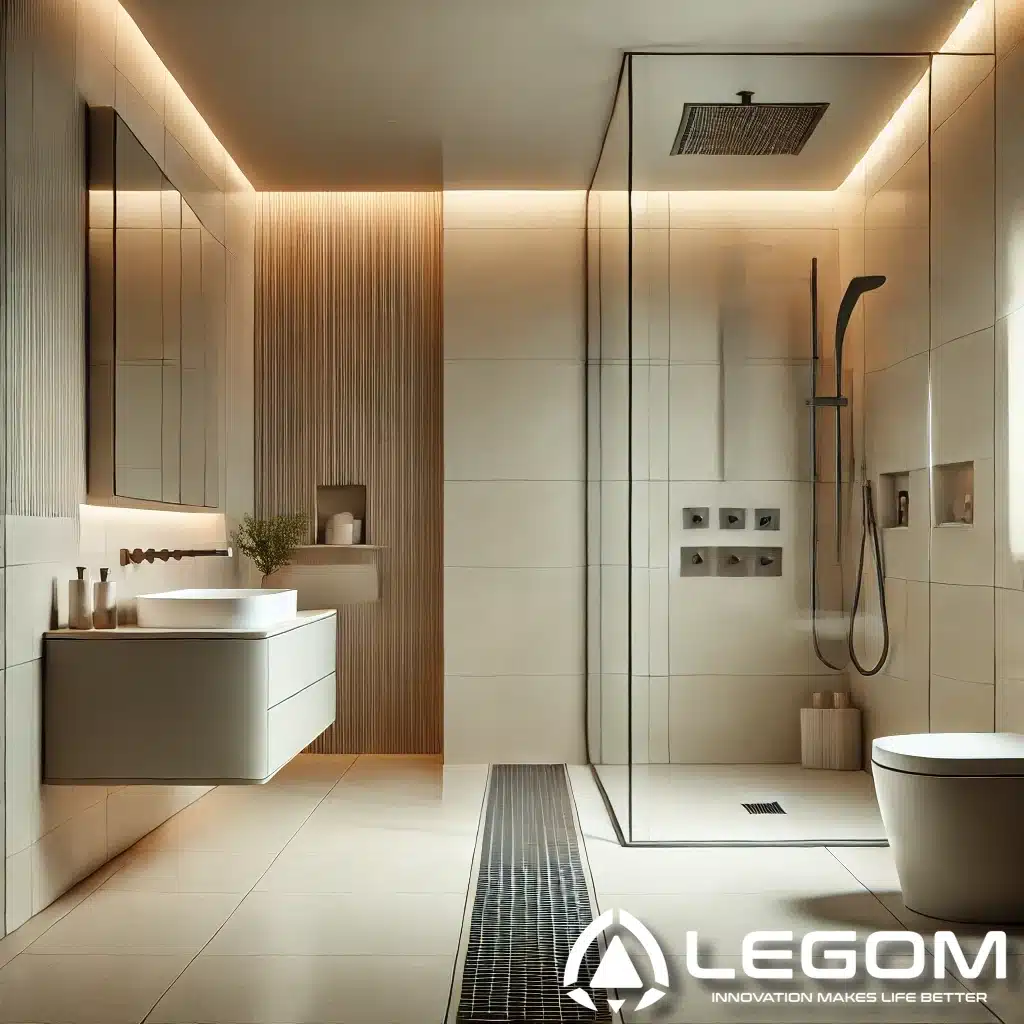
Creating wet room designs requires careful planning and execution to ensure the room is safe, functional, and durable. A wet room is a bathroom where the entire space is designed to be waterproof, with no partitions between the bathing area and the rest of the room. It is essential to ensure the proper slope of the floor towards the drain to prevent puddling. In addition, it is important to consider the wet and dry zones. Good wet room designs also consider separating the bathing and sink areas to reduce water spread. You do not want to step in puddles when you are only using the sink, right?
This is why an effective drainage system is a key element of wet room designs. Depending on the room size, the floor must have the correct slope, typically around 1 to 2 percent, as recommended by international building standards such as those published by the International Code Council. High-quality drainage is crucial for managing large volumes of water. Linear drainage is often a favorite because it is efficient and can be installed along the walls or in the middle of the floor. The entire area must be protected with a waterproof membrane before tiles or other flooring materials are installed.
Crucial Parts in Wet Room Designs
Floor and wall materials, such as ceramic, porcelain, or natural stone, must be waterproof. As a general rule, avoid wooden materials because they easily absorb moisture. This makes them prone to damage when the moisture content is consistently high, and wood in a wet room will deteriorate significantly faster than other materials regardless of any sealing applied.
Applying a waterproof layer under the tiles will add extra protection against water leaks. Ensuring proper installation is critical to maintaining the durability and function of the wet room. Another crucial aspect of wet room designs is waterproofing the entire room. A waterproof membrane must be applied to all surfaces before installing tiles. Sealants should be used at all joints, especially in the corners and around the drain.
Adequate ventilation is also essential to keep the room dry and prevent dampness. An exhaust fan or mechanical ventilation system can help remove moisture effectively, preventing the build-up of dampness that can lead to mold growth. Without proper airflow, even a perfectly waterproofed wet room will develop condensation problems that shorten the life of grouting, sealants, and surface finishes.
Proper water pipe installation is vital to successful wet room designs. Hot and cold-water pipes must be installed correctly and insulated to prevent condensation and maintain water temperature. Hiding pipes behind walls or under floors improves aesthetics, although access for maintenance must still be considered. Additionally, choosing appropriate features and accessories, such as showers and sinks that are resistant to high humidity, will extend the lifespan of the equipment in the wet room.
Routine Maintenance for Long-Term Wet Room Performance
Planning for regular maintenance is essential to ensure the long-term success of wet room designs. Access doors or panels in key areas, such as pipe manifolds, will allow easy maintenance and repairs without damaging the finished surfaces of the room.
Routine inspections of pipes, drains, and sealants should be conducted to identify potential issues before they become serious. Ensuring compliance with local building codes is also a critical step in maintaining the safety and efficiency of your wet room. Using a certified professional will guarantee that the installation meets the required standards. Finally, choosing the right materials for your wet room is crucial for both durability and long-term functionality.
Pipe Recommendations for Wet Room Designs
In four-season countries, modern wet rooms often include heating systems like hydronic underfloor heating, so the pipes need to perform well in both humid environments and heating applications. Choosing the right pipe type is one of the most important decisions in the planning stage. You can explore Legom’s full range of floor heating pipes for options that meet the performance requirements of wet room installations. The most recommended types of pipes for these situations are PE-X, PE-RT, and PE-RT pipes with an oxygen barrier layer.
The table below summarises the key differences between these three pipe types to help you select the right one for your wet room project.
| Pipe Type | Temperature Resistance | Flexibility | Chemical Resistance | Oxygen Barrier | Relative Cost | Best For |
|---|---|---|---|---|---|---|
| PE-X (Cross-linked polyethylene) | High | Good | High | No | Medium to high | Humid environments, general wet room use |
| PE-RT (Raised temperature resistance) | Good | Very good | Moderate | No | Medium | Budget-conscious installations, flexible layouts |
| PE-RT 5-Layer Oxygen Barrier | High | Very good | High | Yes | Higher | Wet rooms with integrated underfloor heating |
PE-X Pipe (Cross-Linked Polyethylene)
PE-X pipes are made from polyethylene with cross-linking, which adds extra strength and flexibility. Depending on the method used for cross-linking, you will find different types like PE-Xa, PE-Xb, and PE-Xc.
One big advantage of PE-X pipes is that they are relatively easy to install and arrange during construction. They are highly resistant to corrosion and chemicals, can handle high temperatures, and do not absorb water, making them well-suited for wet and humid environments. That said, PE-X pipes do come with some downsides. They are more expensive than PVC pipes and require special tools for heating and connecting during installation.
PE-RT Pipe (Polyethylene of Raised Temperature Resistance)
If you are looking for a more flexible option, PE-RT pipes are worth considering. These pipes are designed to handle higher temperatures than standard polyethylene pipes and are more flexible than PE-X.
PE-RT pipes are easier to work with during installation because of their flexibility, and they are also more affordable than PE-X pipes. However, they are not as resistant to chemicals and corrosion as PE-X, which makes them less ideal for environments with extreme conditions. For standard wet room applications without aggressive chemical exposure, PE-RT remains a cost-effective and reliable choice.
PE-RT-5 Layer Oxygen Barrier Pipe
For heating systems, especially those integrated into wet rooms, the PE-RT-5 layer oxygen barrier pipe stands out. It is a PE-RT pipe with an additional oxygen barrier layer that prevents oxygen from seeping into the system. This feature is crucial because oxygen can cause corrosion in the metal parts of heating systems over time.
By blocking oxygen, this pipe helps extend the lifespan of the entire heating system significantly. It is also resistant to high temperatures, high pressure, and chemicals. On the downside, these pipes are more expensive than regular PE-X or PE-RT pipes. Installation also requires extra care to avoid damaging the oxygen barrier layer during handling and fitting.
Which Pipe Is Best for Your Wet Room?
Choosing the right pipe depends on your specific needs and budget. Here is a straightforward guide to help you decide before committing to a purchase.
- If you need a pipe that resists moisture and chemicals, PE-X is a reliable choice. Its cross-linked structure makes it particularly durable in the high-humidity conditions of a wet room, and it can handle temperature variations without losing performance over time.
- For those looking for affordability and flexibility, PE-RT offers a good balance. It is easier to work with during installation, especially in rooms with complex layouts or tight pipe bends, and it provides solid performance for standard wet room applications without a premium price tag.
- If a heating system is part of your design, PE-RT with an oxygen barrier is the top option. It protects against oxidation in the heating system’s metal components, which can significantly extend the overall life of the installation and reduce the risk of corrosion-related failures in the long term.
Good planning and the right materials are the foundation of any successful wet room design. By carefully selecting pipes that meet your wet room’s requirements, you can ensure both durability and functionality for years to come.
Frequently Asked Questions
What is a wet room and how is it different from a regular bathroom?
A wet room is a fully waterproofed bathroom where the entire floor and wall surfaces are sealed, and there is no separate shower enclosure or tray. The shower area is integrated into the open floor space, with drainage achieved through a correctly sloped floor rather than a contained shower base. This design is cleaner in appearance and more accessible than a traditional bathroom with a separate shower cubicle. The key difference is that every surface in a wet room must be treated with a waterproof membrane, not just the shower area, because water can reach any part of the floor during normal use.
What floor slope is required in a wet room?
The floor must slope at approximately 1 to 2 percent gradient toward the drain. This translates to a drop of 10 to 20 millimeters per meter of floor length. A slope below 1 percent may not channel water reliably to the drain, causing puddling, while a slope above 2 percent can make the floor feel uncomfortable to stand on. The exact slope required may also depend on local building codes, so it is worth checking the applicable standards in your region before finalizing the floor design.
What type of waterproofing membrane is suitable for a wet room?
The most commonly used waterproofing solutions for wet rooms are liquid-applied membranes, sheet membranes, and tanking slurry. Liquid-applied membranes are popular because they can be applied with a brush or roller and conform easily to corners, joints, and complex shapes. Sheet membranes offer consistent thickness but require more care at joints and edges. Regardless of the type chosen, the membrane must be applied to the entire floor and all walls up to a suitable height, with particular attention to corners, junctions, and the area around the drain. All joints should also be sealed with compatible sealant tape or compound before tiling.
Why is an oxygen barrier pipe important for wet rooms with underfloor heating?
In a hydronic underfloor heating system, hot water circulates through pipes embedded in the floor. Over time, oxygen that permeates into a standard pipe can cause corrosion in the metal components of the system, such as the boiler, pump, and manifold connections. An oxygen barrier pipe prevents this by incorporating a dedicated barrier layer that stops oxygen from passing through the pipe wall into the water. This significantly extends the life of the heating system’s metal parts and reduces maintenance requirements. For any wet room that includes integrated hydronic underfloor heating, specifying an oxygen barrier pipe is considered best practice.
How often should a wet room be inspected for maintenance?
A wet room should be inspected at least once a year as part of routine building maintenance. Key areas to check include the condition of the grout and tile sealant, particularly at floor joints and wall corners where water concentration is highest. The drain should be checked to ensure it is clear and that the seal around it remains intact. Pipe access panels, if present, should be opened periodically to check for any signs of moisture or minor leaks in the pipe connections. Catching small sealant failures or drain issues early prevents them from developing into more expensive structural repairs later.
Reviewed and updated by the LEGOM Technical Team on May 16, 2026. This article covers wet room design principles including drainage, waterproofing, ventilation, pipe installation, and the recommended pipe types for wet rooms with integrated underfloor heating, based on Legom’s experience as a floor heating pipe and HVAC component manufacturer supplying solutions to partners in more than 90 countries worldwide.