
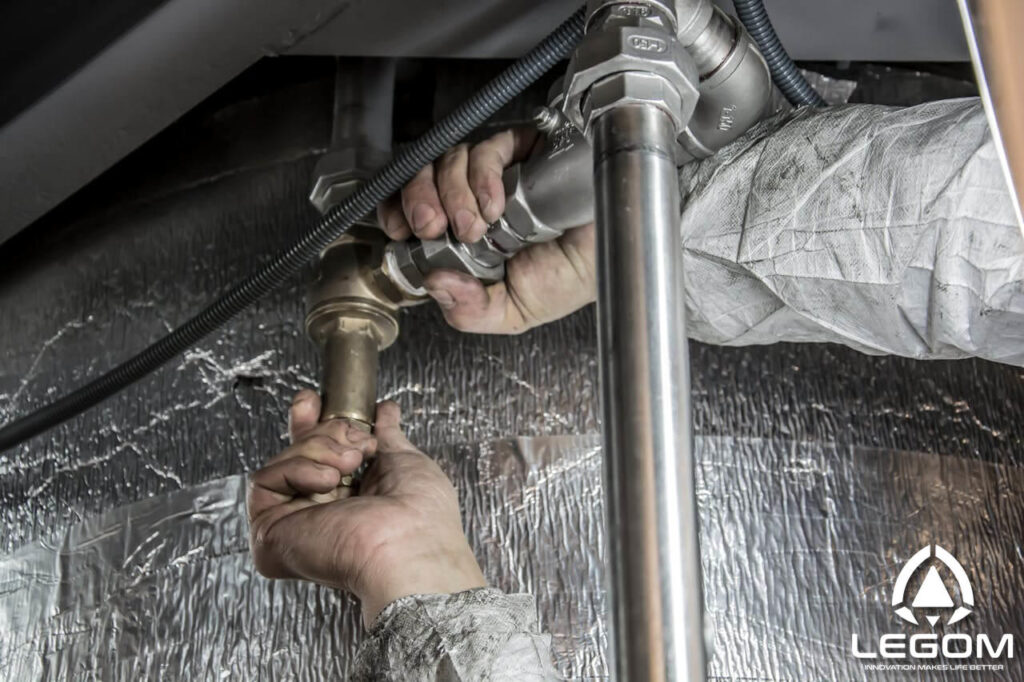
Most plumbing emergencies are not accidents. They are failure modes with known causes, known warning periods, and in several cases a specific valve whose entire job was to prevent them.
That matters because the economics are lopsided. A protective valve is a component cost, fitted once. The failure it prevents is a repair plus water damage plus the disruption, and the repair is almost always billed at emergency rates because these things fail at 2am rather than on a Tuesday afternoon.
This article covers the four failure modes that account for most of what plumbers get called out for, what each one does to a system, and which protective device addresses it. It is written for installers, specifiers and distributors deciding what belongs in a system, not for diagnosing a failure already in progress.
Failure Mode One: Sustained Overpressure
The most under-recognised cause of plumbing failure, because it damages nothing visibly until something gives.
Mains water pressure varies by location and by time of day, and in many networks it sits well above what domestic fittings are designed for. Most residential fixtures, flexible connectors and appliance inlet valves are rated for a working pressure considerably lower than what some mains deliver overnight when demand drops and network pressure rises.
What sustained overpressure does:
- Flexible connector failure. The braided hoses behind washing machines, dishwashers and basins are the most common catastrophic water-damage source in a house, and overpressure shortens their life substantially.
- Appliance inlet valve failure, which is why a dishwasher or washing machine can flood a kitchen while nobody is using it.
- Accelerated wear on every seal and cartridge in the system, so taps and mixers fail years earlier than they should.
- Repeated relief valve discharge, which gets misdiagnosed as a faulty relief valve when the valve is in fact doing its job.
The protective device is a pressure reducing valve, fitted at the point of entry, which holds downstream pressure at a stable set value regardless of what the mains does. Our article on the pressure reducing valve in heating and plumbing covers selection and setting.
Worth noting a naming trap that causes genuine ordering errors: PRV is used for both pressure reducing valve and pressure relief valve, and they do opposite things. One limits normal operating pressure continuously; the other opens only on a fault. Specify by full name, never by the acronym. Our overview of pressure valves sets out the distinction.
Failure Mode Two: Freezing
Water expands by roughly 9 percent on freezing, and that expansion inside a closed pipe generates pressure far beyond what any pipe material will take.
Two points that get the diagnosis wrong:
The pipe usually does not burst where it froze. The ice plug forms, pressure builds between the plug and the nearest closed outlet, and the failure occurs at the weakest point in that trapped section, which may be metres away. So the visible damage is not where the cold was.
The flood happens on the thaw, not the freeze. The pipe splits while frozen, but nothing escapes until the ice melts. That is why burst-pipe damage arrives after the cold snap ends, usually when nobody is expecting it.
The vulnerable locations are predictable: unheated loft and basement runs, pipework in external walls, outdoor taps and their internal supply, and anything in an unheated garage or outbuilding. In commercial and agricultural settings, exposed runs and solar thermal circuits.
The protective device is a freeze protection valve, which opens to bleed a small flow before the water in the line reaches freezing point, keeping water moving in the section at risk. Our article on freeze protection valves covers where they belong and how they are set. For solar thermal circuits, where the exposure is severe and the consequence is a ruined collector, see our 910078NT anti-freeze valve.
Failure Mode Three: Thermal Expansion and Relief
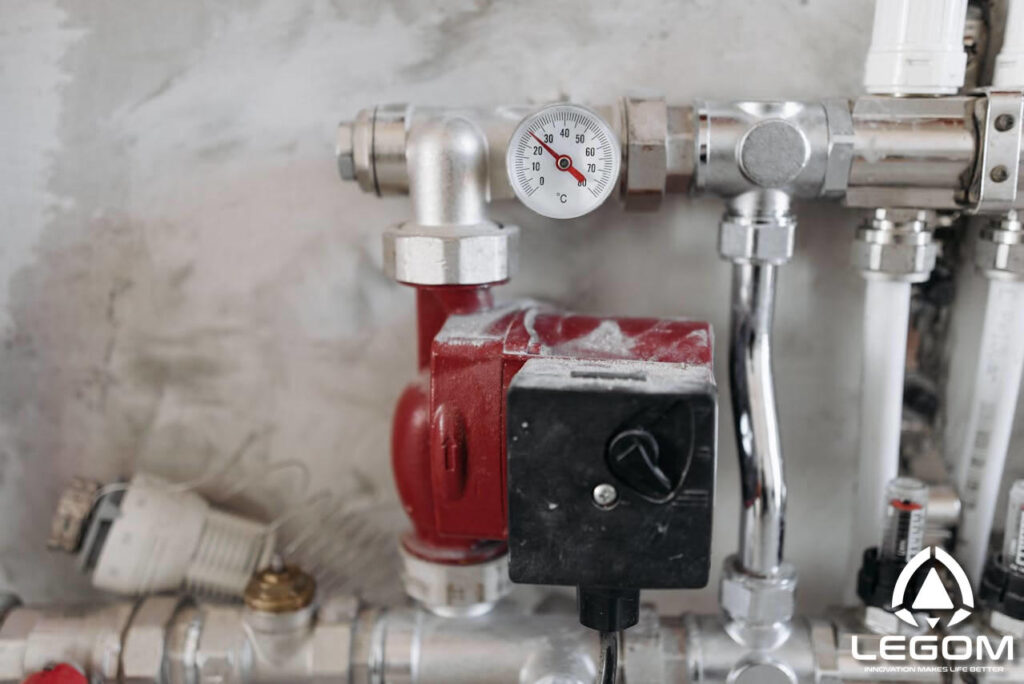
Heat water and it expands. In an open-vented system that expansion has somewhere to go. In a sealed system it does not, and the pressure rises until something accommodates it.
The device that accommodates it correctly is an expansion vessel, a pressurised air cushion that absorbs the volume change. The device that protects against it when the expansion vessel has failed is the temperature and pressure relief valve.
The most common misdiagnosis in hot water systems is here. A T&P valve that discharges repeatedly is almost never faulty. It is almost always doing exactly what it was fitted to do, because the expansion vessel has waterlogged: the internal diaphragm has failed or the air charge has leaked away, the vessel has filled with water, and it can no longer absorb anything. The relief valve becomes the only route for the expansion, so it opens on every heating cycle.
Replacing the relief valve in that situation changes nothing, and the new one will discharge too. Check and recharge or replace the expansion vessel.
Two installation points that matter and are regularly got wrong:
- The discharge pipe must be full bore, routed downwards, unrestricted and terminated safely. Reducing it, adding a restriction, or fitting a valve defeats the device.
- A T&P valve must never be plugged or capped to stop a nuisance discharge. It is the last line of protection against a hot water cylinder failing as a pressure vessel, which is the most destructive failure mode in domestic plumbing.
Our articles on the role of the water heater T&P valve and temperature and pressure relief valves cover the mechanism in detail, and conditions affecting T&P valve replacement covers when replacement is genuinely the answer.
Failure Mode Four: Pressure Surge and Water Hammer
The banging noise when a tap or solenoid valve closes quickly is not cosmetic. It is a pressure wave travelling through the pipework, and its peak can be several times the static system pressure.
What causes it: fast-closing valves, particularly the solenoid valves in washing machines and dishwashers, which close in milliseconds; high flow velocity from undersized pipework; and long straight runs with inadequate support.
What it does over time: loosens pipe supports and joints, fatigues solder and compression joints, damages appliance valves, and wears fittings far beyond their normal service life. The failure arrives years later and looks unrelated to the noise that preceded it.
The answers are a combination of correct sizing, so that flow velocity stays within sensible limits, proper mechanical support, arrestors where fast-closing valves cannot be avoided, and a pressure reducing valve, since surge magnitude scales with the static pressure it starts from.
Drainage: Why Multiple Fixtures Matter
One point of diagnosis worth stating precisely, because it is commonly explained wrongly.
A single blocked fixture is a local blockage, in that fixture’s trap or branch. Annoying, not urgent.
Multiple fixtures backing up at the same time means the blockage is in shared pipework, which is the main drain or the sewer lateral. That is the urgent case, and the reason is not the number of blockages but the location. Everything upstream of that point has nowhere to go, and in the worst case wastewater backs up through the lowest fixture in the building.
The diagnostic shortcut: ask whether the affected fixtures share a drain. If a basin and a ground floor toilet back up together, the problem is downstream of both.
Flood conditions make this worse through backflow, not through supply pressure. When a public sewer surcharges during heavy rainfall, the hydraulic grade rises above the building’s lowest fixtures and wastewater enters the building through floor drains and basement fixtures. The protective device is a backwater valve on the lateral. Rainfall does not pressurise or damage a potable supply.
What This Means for Specification
The pattern across all four failure modes is the same. Each has a protective device, each device costs a fraction of the failure it prevents, and each is routinely omitted because it protects against something that has not happened yet.
A reasonable baseline for a domestic or light commercial installation:
- Pressure reducing valve at the point of entry, wherever mains pressure exceeds fitting ratings or varies widely.
- Freeze protection on any run that leaves the heated envelope, and on solar thermal circuits without exception.
- Expansion vessel correctly sized and charged, with the charge checked at service rather than assumed, because a waterlogged vessel is silent until the relief valve starts discharging.
- T&P relief valve on every unvented cylinder, with the discharge route full bore and unobstructed.
- Backwater valve where the building has fixtures below the public sewer’s surcharge level.
For a safety note that applies regardless: if you suspect a gas leak rather than a water problem, that is not a plumbing matter. Leave the building without operating any electrical switch, and call the gas utility’s emergency line or the emergency services from outside. Gas work is restricted to licensed gas fitters in most jurisdictions.
Frequently Asked Questions
Why does a pipe burst after the cold weather ends rather than during it?
The pipe splits while frozen, but nothing escapes until the ice melts and flow resumes. The damage occurs during the freeze and the flood occurs on the thaw.
My relief valve keeps discharging. Should I replace it?
Usually not. Repeated discharge on a sealed hot water system is most often caused by a waterlogged expansion vessel that can no longer absorb thermal expansion, which leaves the relief valve as the only route. Check and recharge or replace the vessel. Never plug or cap the valve.
What pressure should a pressure reducing valve be set to?
Below the lowest rated working pressure of anything downstream, with margin, which in practice means the flexible connectors and appliance inlet valves rather than the pipework. Check the ratings of the actual fittings specified rather than using a default figure.
Is water hammer actually damaging or just noisy?
Damaging. The pressure peak can reach several times static pressure, and repeated surges fatigue joints, loosen supports and shorten the life of appliance valves. The failure typically appears long after the noise started.
Why do multiple fixtures back up at once?
Because the blockage is in pipework they share, which means the main drain or the sewer lateral rather than any individual trap. That is the urgent case, and the location is what makes it urgent rather than the number of fixtures affected.
Does flooding damage water supply pipes?
Not through pressure. Flooding causes problems through sewer backflow into the building, ground movement disturbing buried pipework, and water entering through floor drains. The protective device for the first of these is a backwater valve.
Legom Protective Valves

Jiaxing Legom Technology Co., Ltd. manufactures protective and control valves for heating and plumbing systems in Jiaxing, Zhejiang, supplying more than 90 countries.
Our range covers the protective side of the specification above: pressure valves including reducing and relief, anti-freeze valves for exposed and solar circuits, and temperature control valves including thermostatic mixing for scald protection. Alongside these we manufacture manifolds, HVAC valves and room thermostats.
We produce our own wax thermostatic elements rather than buying them in, which is what keeps actuation temperature consistent across production batches. On materials, our overview of HVAC valve materials sets out where DZR brass and stainless steel are each appropriate, which matters for potable water approvals.
For distributors and brands, our OEM and ODM service covers branding, marking, connection standards and market documentation. Our background in supplier evaluation is set out in the role of valve suppliers in your supply chain, and customs classification in HS codes for HVAC products.
Reviewed by Maggie Shen, Director at Legom, on October 26, 2026. This article was reviewed for technical accuracy, including the effect of sustained overpressure on flexible connectors and appliance inlet valves, the location and timing of freeze-related pipe failure, the distinction between pressure reducing and pressure relief valves, expansion vessel waterlogging as the usual cause of repeated relief valve discharge, discharge pipe routing requirements, water hammer surge magnitude, and the role of backwater valves in sewer surcharge conditions.