

A pressure valve is a safety and control valve used in HVAC and plumbing systems to regulate pressure, temperature, or flow, protecting both equipment and users from unsafe operating conditions. The category covers several distinct devices, including temperature and pressure relief valves, freeze protection valves, scald protection valves, dynamic balancing valves, and fan coil component valves.
Pressure valves play an important role in regulating and protecting temperature and pressure in various Heating, Ventilation, and Air Conditioning devices. Insight into these devices is essential for anyone with hot water pipework at home or on business premises, and it is effectively mandatory for anyone who relies on HVAC equipment commercially.
What Is a Pressure Valve?
A pressure valve is a special valve used for regulating pressure and temperature across a range of purposes. This includes maintaining consistent temperature in particular rooms, protecting a water heater from dangerous pressure buildup, and controlling water temperature at the tap according to need.
The high demand for HVAC equipment, supported by continuing technological development, has produced a wide variety of devices that can be adapted to different requirements. What unites them under this category is purpose rather than mechanism: each one acts automatically to keep a system within safe operating limits, without requiring a user to intervene.
A note on the terminology
It is worth clarifying something that confuses many buyers, because the category name does not describe every member of it precisely.
Some valves in this family are genuinely pressure-actuated, responding to the force of water or air in the system. Dynamic balancing valves work this way, closing as flow rate rises and reopening as it stabilises.
Others are temperature-actuated, responding to how hot or cold the medium is rather than to pressure. Freeze protection and scald protection valves both work this way, using a wax thermostatic element that expands and contracts to move the valve.
A few respond to both. The temperature and pressure relief valve is the clearest example, opening if either the temperature or the pressure inside a vessel reaches a dangerous level.
Understanding which principle applies to the valve you are specifying matters, because it determines what parameter you need to match to your system. Asking for a pressure rating on a valve that actuates on temperature will not tell you whether it acts at the right point.
Benefits of Using a Pressure Valve
The use of a pressure valve must suit your specific needs, but in general these devices bring several benefits that apply across the category.
Accurate regulation. They control temperature or pressure precisely, in both air and water systems, which is closely tied to the safety of the people using that system daily.
Equipment protection. A relief valve prevents a storage vessel from rupturing. A freeze protection valve prevents pipes from bursting. In both cases the valve costs a small fraction of what it protects.
User protection. A scald protection valve stops dangerously hot water reaching a tap or shower, which matters most in households with children or elderly occupants and in care settings where occupants may not react quickly.
System efficiency. Balancing valves hold flow rates steady across a distribution system, which prevents some circuits being starved while others are over-supplied, and reduces the energy wasted in correcting the imbalance.
Passive operation. Most of these valves work mechanically without electricity, wiring, or a controller. That means they continue protecting during a power failure and cannot be accidentally switched off or misconfigured, which is exactly what you want from a safety device.
You can feel the benefit clearly when a water heating device is installed in a bathroom. When the heating system is activated, the flow of hot water can be regulated to a particular tap without flowing into the bathtub or toilet pipes, and the risk of scalding is kept under control by the presence of a safety valve.
Types of Pressure Valves According to Needs
One characteristic of the right product is that it is used according to need. Of course you have to choose something efficient, reliable, and affordable, but suitability to the application is the most important criterion because you will be using it for years.
Procurement of HVAC equipment should begin by identifying your specific requirement and then matching it to what is available, rather than the reverse. The table below gives an overview before each type is examined in turn.
| Valve type | Actuated by | Main function | Typical application |
|---|---|---|---|
| Temperature and pressure relief valve | Both | Prevents excessive temperature and pressure buildup | Boilers, water heaters, pressure storage |
| Fan coil component valve | Flow control | Heats and cools rooms without air ducts | Fan coil units, HVAC zoning |
| Dynamic balancing valve | Pressure and flow | Limits flow rate and stabilises system balance | Hydronic circuits, HVAC distribution |
| Freeze protection valve | Temperature (low) | Prevents pipe blockage and bursting from freezing | Outdoor pipework, heat pumps, cold climates |
| Scald protection valve | Temperature (high) | Shuts off flow when water becomes dangerously hot | Bathrooms, care facilities, solar hot water |
| Water return system control valve | Temperature | Controls hot water recirculation | Hot water loops, instant hot water systems |
Temperature and Pressure Relief Valve
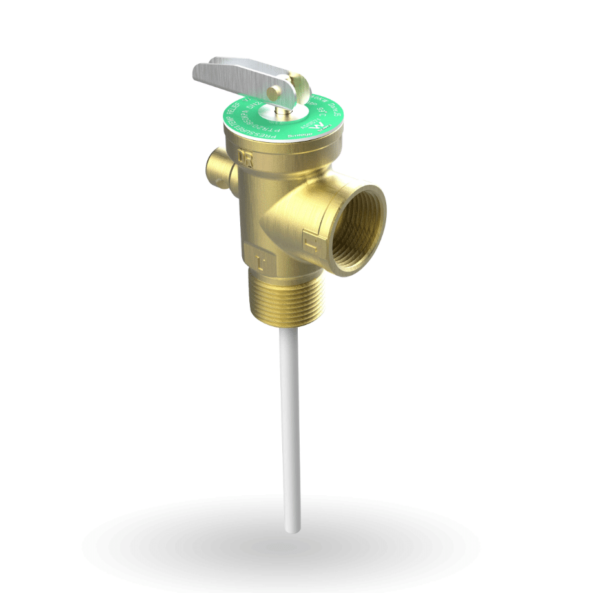
This device prevents excessive temperature and pressure through an automatic wax-actuated seal-opening system. It is typically installed in boilers, water heaters, or controlled pressure storage vessels. A good product should reset automatically once conditions return to normal, rather than continuing to discharge and waste hot water.
The distinction worth holding onto is that this valve protects the vessel, not the user. A scald protection valve keeps dangerous water away from a person; a relief valve keeps a tank from rupturing. Both are safety devices, but they guard against different failures at different points in the system.
| Parameter | 930004NT |
|---|---|
| Opening temperature | 93°C to 99°C |
| Resetting temperature | ≥70°C |
| Pressure ratings | 500 to 1400 kPa across seven options |
| Resetting pressure | ≥90% of opening pressure |
| Water-touching material | DZR brass |
| Sizes | DN15 (1/2″), DN20 (3/4″) |
| Standard | AS1357.1 |
Procurement of a TP relief valve must consider several technical parameters. A good product carries clear information on opening and resetting temperature, pressure rating, resetting pressure, water-touching metal materials, and DN size. Also consider the product’s expansion rating and standards compatibility, since fitting a valve rated above the tank’s design pressure means it may never open before the tank reaches a dangerous condition. For a fuller treatment of this valve type, see our guide to pressure relief valves.
Fan Coil Component Valves

The main function of this device is to heat and cool rooms without air ducts. The valve is installed as part of a fan coil system, which consists of a coil, a fan, and a condensate arrangement, so that the temperature setting for each zone is accurate to requirement.
A fan coil takes hot or chilled water from a central source and blows air across the coil into the room. This combines the water distribution of a hydronic system with the fast response and cooling capability of forced air, which is why it appears so widely in commercial buildings, hotels, and apartment blocks.
After appointing a credible supplier, you should obtain transparent information about the applicable media, for example whether it is rated for water only or also for ethylene glycol solutions. Where glycol is used, the maximum permitted percentage matters, since glycol changes both the freezing point and the viscosity of the circuit. Confirm working pressure and both operating and ambient temperature ranges.
Dynamic Balancing Valve

This valve functions as a flow limiter, preventing flow rates that are too large. It closes as the flow rate becomes excessive and opens again once flow stabilises, allowing users to hold the flow rate steady at the desired setting.
The problem it solves is worth explaining, because it is invisible until you look for it. In a distribution system with several circuits, the circuit nearest the pump offers least resistance and therefore takes a disproportionate share of the flow. Distant circuits are starved. The result is rooms that never reach temperature while others overheat, and an operator who responds by raising the pump speed, which wastes energy without correcting the imbalance.
A dynamic balancing valve limits each circuit to its designed flow regardless of pressure variation elsewhere, so every part of the system receives what it was designed to receive. Key parameters to check are the flow rate setting range and the pressure differential range across which the valve maintains that setting.
Freeze Protection Valve

Pipeline systems frequently suffer from freezing during long winters, and the damage is disproportionate to the cause: water expands as it freezes, and a burst pipe can cause more damage in an hour than the entire heating system costs.
This valve prevents that by draining water from the pipe before it can freeze solid. It opens when the water temperature falls to the opening threshold, as low as 1.6°C, and reaches full open at 4°C. Once the water temperature recovers above 7°C, the valve closes automatically and normal pipe operation resumes.
The logic is that moving water freezes far more slowly than still water, and a pipe that has partially drained has room to accommodate any ice that does form. Because the valve is thermostatic and mechanical, it operates during a power failure, which matters because power failures and freezing weather frequently arrive together.
Legom produces two variants for different applications: the 910078NT designed for heat pump circulation systems, and the 910026NT for sanitary and domestic heating applications. These valves must be installed vertically with the outlet facing downward so that drainage works as intended. For the full working principle, see our article on freeze protection valve function.
Scald Protection Valve

This valve protects users from burns by shutting off water flow when it becomes dangerously hot. It is a shut-off device rather than a blending device, and understanding that distinction is essential to specifying it correctly.
The 910028NT is made of brass and operates by closing the valve as water temperature rises to the protection temperature of 43.3°C, at which point no water passes through. It reopens automatically once the temperature falls back to 35°C, restoring normal flow without any manual reset.
Reading the datasheet parameters. Datasheets for this valve list an initial open temperature of 36.7°C, a full open temperature of 43.3°C, and a full close temperature of 35°C. These figures follow standard wax element convention and describe the travel of the thermostatic element rather than the state of the water path. Because a fully extended element drives the valve seat closed, element “full open” at 43.3°C corresponds to the water path being shut, which is the protective state. The written working principle in the datasheet is the authoritative reference when comparing products.
| Parameter | 910028NT |
|---|---|
| Body material | Brass |
| Protection temperature | 43.3°C, flow shuts off |
| Reset temperature | 35°C, flow restored |
| Working temperature range | -30°C to 80°C |
| Maximum pressure | 1 MPa (10 bar) |
| Maximum flow | 20 L/min at 300 kPa |
| Control accuracy | ±1°C |
| Thread specification | 3/8″ NPT, 3/4″ NPT |
Installation is mandatory under plumbing regulations in many regions, particularly in healthcare facilities, aged care homes, and schools. The valve can be installed at shower locations, bathtub spouts, kitchen faucets, and other outlets where scald risk exists.
One placement rule matters especially: do not install it downstream of a mixing valve. Where a mixing valve has already tempered the water, the scald protection valve would only ever sense water that is already safe and could never act if the mixing valve failed. It must sense the hot source condition, which means fitting it upstream or on a separate branch. Our guide to how a scald protection valve works covers this in detail.
Other Types in the Category
Beyond the types above, several other valves belong to this family with more specific functions.
Water return system control valve. A thermostatic valve fitted at the far end of a hot water loop, controlling recirculation so that hot water is always waiting close to the outlet rather than sitting cold in the pipe. It opens when the loop cools and closes when hot water arrives, meaning circulation happens only when needed. See our guide to water return system control valves.
Dynamic flow balancing valve. Related to the dynamic balancing valve, this maintains a constant flow rate in a circuit regardless of pressure fluctuations elsewhere in the system, which is particularly useful in larger distribution networks where load varies through the day.
Pressure limiting valve. Caps the pressure delivered downstream, protecting fittings and appliances in areas where mains supply pressure is high or variable. Excessive supply pressure shortens the life of every fitting it reaches, and this valve addresses the cause rather than the symptoms.
How to Choose the Right Pressure Valve
Selection follows a short sequence, and working through it in order avoids most specification errors.
1. Identify what you are protecting against
The single most useful question is what should happen when conditions go wrong. Should the flow stop, as with scald protection? Should pressure be released, as with a relief valve? Should flow be limited, as with a balancing valve? Should water be drained, as with freeze protection? The answer identifies the valve type before any parameter is considered.
2. Match the switching point to your system
A freeze protection valve with the wrong opening temperature will let a pipe freeze before it activates. A relief valve rated above the tank’s design pressure may never open in time. Confirm that the temperature or pressure at which the valve acts corresponds to the conditions your system actually produces.
3. Check flow capacity and pressure loss
Every valve consumes some pressure when water passes through it. On a system with generous pressure this is immaterial, but on one already marginal at the furthest outlet, adding a valve without checking its flow characteristic can noticeably weaken a shower. This is a design oversight rather than a fault, and it is easily avoided by consulting the manufacturer’s curve.
4. Confirm materials and certification
Brass is standard for potable water, with dezincification-resistant brass specified where water chemistry is aggressive. For markets regulating materials in contact with drinking water, WRAS approval in the UK or ACS in France is the recognised route. Confirm the certificate covers the specific model you are ordering rather than the supplier’s range in general.
5. Establish long-term accuracy, not just initial accuracy
This is the parameter buyers ask about least and should ask about most. A valve that holds its switching point when new but drifts after tens of thousands of cycles provides progressively less protection while appearing to function normally. Ask what accuracy the valve retains after 100,000 cycles rather than what it achieves on the test bench.
“One mistake buyers often make when procuring pressure valves is focusing only on price per unit rather than the full parameter set. A freeze protection valve with the wrong opening temperature can let a pipe freeze before it ever activates. A scald protection valve with inadequate flow tolerance can restrict water pressure to the point where it becomes inconvenient. When reviewing products, I always tell our partners: read the full technical datasheet, confirm the opening and closing temperatures match your system’s operating conditions, and ask the supplier what happens when the valve reaches the end of its thermal cycling life. That conversation tells you a lot about how seriously the manufacturer takes their product.”
— Maggie Shen, Director of Legom
Pressure Valve Supplier
There are many product choices for pressure valves with specialised specifications. If you are still unsure which suits your needs, consult the supplier before making a transaction so that you receive a recommendation based on your actual system rather than on what is in stock. Do not hesitate to ask for full product specifications to confirm they suit your requirements.
Three questions separate a supplier who understands these products from one who simply sells them. Ask for the complete datasheet rather than a summary. Ask whether they manufacture or source, since a factory can adjust a switching temperature and investigate a quality issue directly while a trading company must relay every request. And ask for samples, which is standard practice in professional procurement and which a confident manufacturer will not resist.
You can obtain complete information about pressure valves by contacting Jiaxing Legom Technology Co., Ltd. We are an experienced HVAC valve manufacturer and supplier in China, producing a 68-model range at our own facility in Jiaxing, Zhejiang Province.
Because we also manufacture the wax thermostatic elements inside these valves rather than sourcing them externally, switching characteristics can be specified at the source rather than selected from stock options. Our elements cover activation temperatures from -5°C to 135°C across 36 models, each individually tested and rated for 100,000 operating cycles. OEM and ODM services are available across the range, handled under confidentiality agreement.
Frequently Asked Questions
What is a pressure valve?
A pressure valve is a safety and control valve used in HVAC and plumbing systems to regulate pressure, temperature, or flow, protecting equipment and users from unsafe operating conditions. The category includes temperature and pressure relief valves, freeze protection valves, scald protection valves, dynamic balancing valves, fan coil component valves, and water return system control valves. Despite the name, not all of them actuate on pressure: several respond to temperature using a wax thermostatic element, and some respond to both.
What is the difference between a pressure relief valve and a scald protection valve?
They protect against different risks at different points. A temperature and pressure relief valve protects the equipment, releasing pressure and preventing dangerous overheating in boilers and water heaters so the vessel cannot rupture. A scald protection valve protects the user at the point of use, shutting off flow entirely when water temperature rises to the protection point, typically 43.3°C, and reopening once it falls back to around 35°C. Both are safety valves, but one guards a tank and the other guards a person.
When is a freeze protection valve necessary?
Whenever a pipeline is exposed to temperatures that could freeze the water inside. This is common in outdoor pipework, heat pump circulation systems, and pipes running through unheated spaces such as roof voids or external walls, and in cold climates these valves are considered standard practice. The valve activates automatically when water temperature drops to the opening threshold, draining water from the pipe to prevent ice formation, without any electrical input or manual intervention. That passive operation matters because power failures and freezing weather often occur together.
Do pressure valves need electricity?
Most do not. Temperature and pressure relief valves, freeze protection valves, scald protection valves, and water return system control valves all operate through mechanical means, either a spring responding to pressure or a wax thermostatic element responding to temperature. This is a genuine advantage for a safety device: the valve continues protecting during a power failure, cannot be accidentally switched off, and cannot be misconfigured by a controller. Some advanced mixing valves add an electric actuator for remote monitoring, but the underlying safety function remains mechanical.
What parameters should I check before buying a pressure valve?
The key parameters vary by type. For TP relief valves, check opening and resetting temperature, pressure rating, resetting pressure, and DN size. For scald protection valves, check the protection and reset temperatures, material, working temperature range, and maximum pressure. For freeze protection valves, check opening and closing temperatures and material compatibility with the pipe fluid. For dynamic balancing valves, check the flow rate setting range and pressure differential specifications. Across all types, ask about control accuracy retained after tens of thousands of cycles rather than accuracy when new, and always request a full technical datasheet before ordering.
Is scald protection valve installation mandatory?
In many countries and regions it is required by plumbing codes or government regulations, particularly in healthcare facilities, aged care homes, and schools where vulnerable users including children and elderly people are present. The specific requirements vary by country and building type. In residential settings it is not always legally required but is strongly recommended as a safety measure. Check your local plumbing code and consult a licensed plumber to confirm what applies to your specific project.
Why is a dynamic balancing valve needed if the system already works?
Because an unbalanced system can appear to work while performing poorly. In a distribution system with several circuits, the one nearest the pump takes a disproportionate share of the flow while distant circuits are starved, producing rooms that never reach temperature alongside others that overheat. The usual response is to raise the pump speed, which consumes more energy without correcting the imbalance. A dynamic balancing valve limits each circuit to its designed flow regardless of pressure variation elsewhere, so the system delivers what it was designed to deliver.
Can Legom supply pressure valves for international projects?
Yes. Legom supplies pressure valves and the wider HVAC valve range to partners in more than 90 countries through a network of over 400 business partners. Products are available with international certification and in specifications suited to different regional standards, including both G and NPT thread options. OEM and ODM services are available for companies supplying under their own brand, covering switching temperatures, pressure rating, connection size, and body material. Contact the technical team to discuss requirements, quantities, and delivery options.
Reviewed by Maggie Shen, Director at Legom, on August 4, 2026. This overview of HVAC pressure valves was reviewed for technical accuracy, including the corrected working principle of the 910028NT scald protection valve and the distinction between pressure-actuated and temperature-actuated devices.