
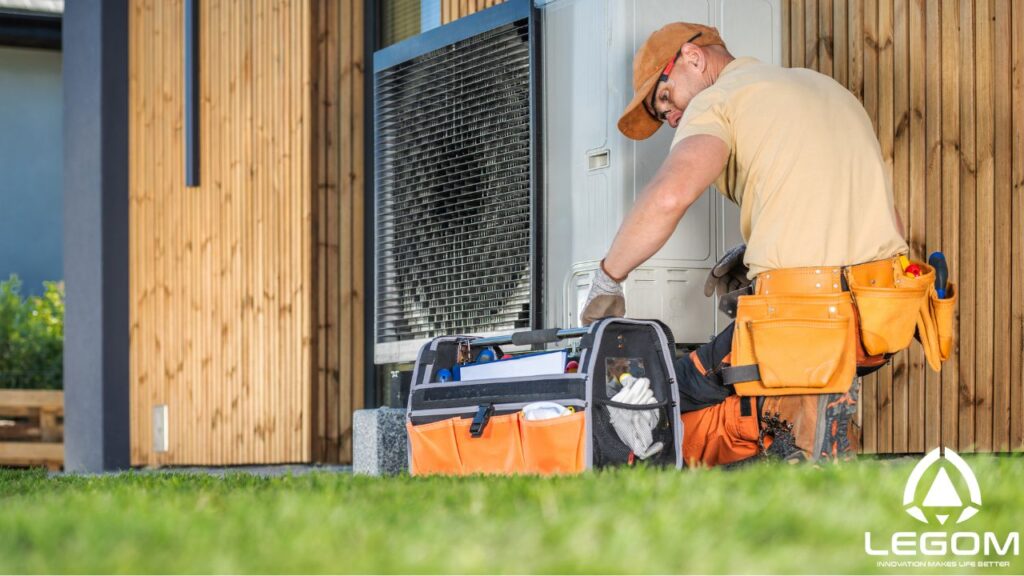
People increasingly choose heat pumps as their solution for heating and cooling in homes and commercial buildings. Heat pumps work by transferring heat from one place to another, and they can provide both heating in winter and cooling in summer. However, like any technology, heat pumps have pros and cons. The following comprehensive guide gives you a clear picture of both sides, so you can decide whether a heat pump is right for you and choose one based on your specific needs.
What Is a Heat Pump?
A heat pump is a device that transfers heat from one place to another using a refrigeration cycle. In winter, it extracts heat from the outside air or ground and moves it indoors to warm your space. In summer, the process reverses and the unit acts like an air conditioner, removing heat from inside and expelling it outdoors. Because it moves heat rather than generating it, a heat pump can deliver far more energy as heat than it consumes as electricity. According to the International Energy Agency (IEA), heat pumps are a central technology in the global transition to efficient, low-carbon heating.
The efficiency of a heat pump is expressed as its Coefficient of Performance, or COP. A COP of 3 means the unit delivers three units of heat for every unit of electricity it draws. No combustion-based system can exceed a ratio of 1, which is the fundamental reason heat pumps sit at the centre of modern heating strategy. If you would like a fuller explanation of the internal parts that make this possible, see our article on heat pump components and benefits.
Pros of Heat Pumps
Let us start with the advantages of owning a heat pump.
Energy Efficiency
Heat pumps are highly energy-efficient compared to traditional heating and cooling systems. Because they transfer heat rather than generating it through combustion or electrical resistance, they use considerably less energy. Lower energy consumption leads to lower utility bills. Based on its heat output relative to electricity input, a heat pump can be up to three times more efficient than conventional heating systems. Our article on heat pump cost and annual energy savings looks at what this means for a household budget over a full year.
Dual Functionality
One of the most significant advantages of a heat pump is its ability to provide both heating and cooling. This dual-purpose functionality means a single unit handles your winter heating and summer cooling needs. All year round, you only need one heat pump unit to keep your home comfortable, which simplifies both installation and maintenance.
Environmentally Friendly
Heat pumps work by transferring heat instead of producing it through burning fossil fuels, so they generate fewer emissions. Many models run on electricity that can be sourced from renewable energy, making them an eco-friendly option compared to gas-powered heating systems. This helps reduce reliance on fossil fuels, lower your carbon footprint, and reduce overall environmental impact.
The refrigerant matters here too. Modern units increasingly use R32 refrigerant, which carries a considerably lower global warming potential than the older R410A it replaces, and it also allows a smaller refrigerant charge for the same output.
Longevity
With proper maintenance, heat pumps can last a long time. On average, they last between 10 and 15 years, often outlasting traditional heating systems such as furnaces or boilers. Some high-quality units, when well maintained, continue performing reliably well beyond this range.
Low Maintenance Costs
Another significant advantage is that heat pumps require less maintenance than conventional heating and cooling systems. Because they do not rely on combustion or involve the intricate parts found in a furnace, they are less prone to breakdowns and generally need fewer repairs over their service life.
Pairs Well with Underfloor Heating
A heat pump performs at its best when it can run at a low flow temperature, and this is exactly what hydronic underfloor heating asks of it. Where a radiator circuit may need water at 60 to 80°C, an underfloor system is typically satisfied by 30 to 45°C. Running at that lower temperature raises the COP considerably, which is why the two technologies are so frequently specified together in new builds and major renovations.
Cons of Heat Pumps
Heat pumps also have disadvantages that are worth understanding before you commit. Here are the main drawbacks.
High Initial Installation Cost
While heat pumps have low running and maintenance costs, the initial cost of installation can be significantly higher than traditional heating and cooling systems. This is especially true for ground-source heat pumps, which require extensive digging for the geothermal loop installation. The upfront price can be a barrier for many homeowners. For a detailed breakdown of what drives this cost, you can read our article on whether the heat pump installation cost is worth the price.
Efficiency Declines in Extreme Cold
Heat pumps may work less efficiently in extremely cold areas, while in moderate climates they operate smoothly and reliably. In regions with prolonged sub-zero temperatures, an air-source heat pump needs more energy to extract heat from the cold outside air, and may require a backup heating system. This can lead to higher energy use and increased costs. It is worth noting, however, that modern cold-climate heat pumps have improved dramatically on this front, with some units operating efficiently down to -35°C.
Space Requirements
Heat pump systems, particularly ground-source or geothermal units, need a fair amount of space for installation. Beyond the outdoor compressor or fan, geothermal systems require significant land area for the underground loops. This can be a problem for homes with limited outdoor space. Air-source heat pumps are far more compact and avoid this issue, which is one reason they are the most popular type for residential use. For a comparison of the different types, see our guide on types of heat pumps for various applications.
Outdoor Unit Noise
One consideration that rarely appears in brochures is noise. The outdoor unit contains a fan and a compressor, both of which produce sound during operation. In most cases the level is modest and comparable to an air conditioning unit, but placement matters. Siting the unit directly beneath a bedroom window or tight against a neighbour’s boundary can turn a minor characteristic into a genuine nuisance. Inverter-driven units run more quietly than fixed-speed models because they modulate rather than cycling on and off abruptly, and sensible positioning resolves most concerns before they arise.
| Aspect | Pros | Cons |
|---|---|---|
| Energy use | Up to 3x more efficient than conventional systems | Efficiency drops in extreme cold (air-source) |
| Functionality | Heating and cooling in one unit | May need backup heat in very cold climates |
| Environment | Lower emissions, renewable-compatible | Emissions depend on the electricity source |
| Cost | Low running and maintenance costs | High upfront installation cost |
| Lifespan | 10–15 years, often longer than furnaces | Requires periodic professional servicing |
| Space | Air-source units are compact | Ground-source needs significant land area |
| Noise | Inverter units run quietly | Outdoor unit placement needs planning |
“When customers weigh up the pros and cons of heat pumps, the two concerns I hear most often are the upfront cost and cold-climate performance. Both are real, but both are also where the technology has moved fastest. The cold-weather objection in particular is largely outdated for modern air-source units. We design our heat pumps to remain stable and efficient down to -35°C, which covers the vast majority of climates where people worried a heat pump simply would not cope. The honest answer to most buyers is that an air-source heat pump avoids the two biggest cons, the extreme installation cost and space requirement of geothermal, while keeping nearly all of the benefits.”
— Maggie Shen, Director of Legom
Matching the Heat Pump to Your Home
Once you have decided a heat pump suits you, the next question is capacity. An undersized unit struggles to keep up on the coldest days, while an oversized one cycles inefficiently and wears out sooner. Capacity is expressed in kilowatts and depends on the floor area you are heating, the insulation standard of the building, your local climate, and whether the unit also supplies domestic hot water.

Legom manufactures air-source heat pumps in four capacities, giving a straightforward path from a small apartment through to a large property or light commercial installation. The table below sets out the range and its typical application.
| Capacity | Typical Application |
|---|---|
| 5kW | Apartments and small, well-insulated homes |
| 6kW | Small to mid-sized family homes |
| 9kW | Larger family homes or older properties with higher heat loss |
| 16kW | Large properties and light commercial installations |
All models use R32 refrigerant and DC inverter compressors, carry CE certification, and are manufactured to comply with EU Ecodesign Regulation 813/2013 for space heaters. Legom exports these units to distribution partners in markets ranging from Poland and Russia to Australia, covering both cold-climate heating and hot water applications. A qualified installer should carry out a heat loss calculation for your specific property before the capacity is finalised, as floor area alone is not a reliable guide.
Conclusion
Heat pumps offer a number of compelling advantages alongside some real disadvantages. Understanding both sides leads to a wiser choice for homeowners. Ultimately, whether a heat pump is right for your home depends on your climate, budget, and long-term energy goals.
That said, we have a solution that addresses most of the cons. Instead of installing a ground-source heat pump that requires a lot of space and a very high installation cost, you can consult with us. We mass-produce air-source heat pumps that are compact, easy to install, and operate stably even at -35°C. You will also receive very competitive pricing from us as a heat pump manufacturer in China.

Frequently Asked Questions
What is the biggest advantage of a heat pump?
The biggest advantage is energy efficiency. Because a heat pump transfers existing heat rather than generating it through combustion or electrical resistance, it can deliver up to three times more heat energy than the electricity it consumes. This translates directly into lower utility bills compared to conventional gas or electric heating. The second major advantage is dual functionality: a single heat pump provides both heating in winter and cooling in summer, eliminating the need for separate systems.
What is the biggest disadvantage of a heat pump?
The most commonly cited disadvantage is the high upfront installation cost, particularly for ground-source (geothermal) systems that require extensive excavation. The second is reduced efficiency in extreme cold for air-source models, although modern cold-climate units have largely addressed this, with some operating efficiently down to -35°C. For most homeowners, choosing a high-quality air-source heat pump avoids both the extreme installation cost of geothermal systems and the cold-weather limitations of older units.
Do heat pumps work in very cold climates?
Modern air-source heat pumps work well in very cold climates, which is a significant improvement over older models. While efficiency does decline as outdoor temperatures fall, current cold-climate heat pumps are engineered to maintain stable, efficient operation even in sub-zero conditions. Legom heat pumps, for example, are designed to work reliably down to -35°C. In the coldest regions, a backup heating source may still be recommended for the most extreme days, but for the vast majority of climates, a modern heat pump handles winter heating on its own.
How long does a heat pump last?
On average, a heat pump lasts between 10 and 15 years with proper maintenance, which often exceeds the lifespan of traditional furnaces or boilers. The actual service life depends on the quality of the unit, how well it is maintained, the climate it operates in, and how heavily it is used. Regular professional servicing, keeping the outdoor unit clear of debris, and addressing minor issues promptly all extend the operating life. High-quality units with efficient inverter compressors tend to last toward the upper end of this range or beyond.
What size heat pump do I need?
Capacity depends on the floor area being heated, the building’s insulation standard, the local climate, and whether the unit also supplies domestic hot water. As a general guide, 5kW suits apartments and small well-insulated homes, 6kW suits small to mid-sized family homes, 9kW suits larger or older properties with higher heat loss, and 16kW is intended for large properties and light commercial use. Correct sizing matters in both directions: an undersized unit cannot keep up on the coldest days, while an oversized one cycles inefficiently and wears out faster. A qualified installer should carry out a proper heat loss calculation before you commit.
Is a heat pump worth the high installation cost?
For most homeowners, yes, especially over the long term. While the upfront cost is higher than conventional systems, the significantly lower running costs typically recoup the difference over the unit’s service life. Most owners begin seeing measurable savings on energy bills within the first year. Choosing an air-source heat pump rather than a geothermal system reduces the upfront cost substantially while retaining most of the efficiency benefits, making it the most accessible entry point for anyone switching from a conventional heating and cooling system for the first time.
Reviewed by Maggie Shen, Director at Legom, on July 22, 2026. This guide to the pros and cons of heat pumps was reviewed for technical accuracy, including the capacity range and cold-climate performance figures.