
Have you ever wondered why people in South Korea love spending time on the floor, from eating and lounging to sleeping? The secret lies in an ancestral cultural heritage called Ondol, a traditional underfloor heating system that has warmed homes across the Korean Peninsula for thousands of years.
In the past, Ondol worked naturally by channeling hot smoke from the kitchen fireplace through stone flues beneath the floor before releasing it through a chimney. This ingenious system not only dispelled the extreme chill of piercing Korean winters but also shaped the architectural philosophy and social customs of its people. The floor of a home became more than just something to stand on; it was the heart of family warmth, a place to share stories and maintain togetherness amidst freezing weather.
From Traditional Ondol to Modern Hydronic Systems
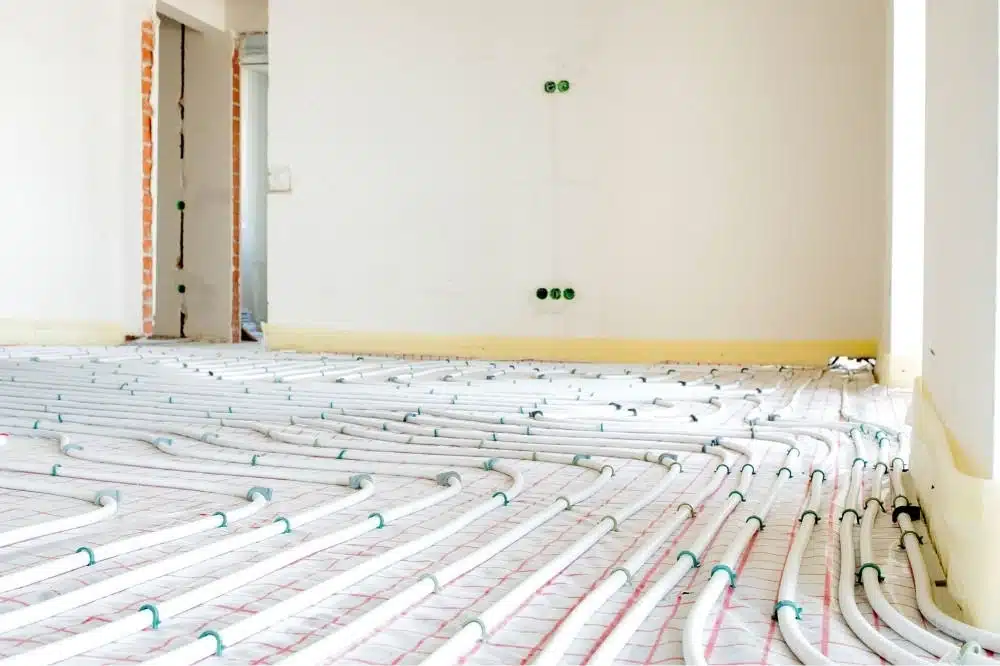
The modern hydronic system serves as the perfect evolution of the traditional Ondol heritage. Replacing combustion smoke with the circulation of warm water flowing through a network of flexible pipes under the floor, the hydronic system fully adopts the essence of Ondol but with a far higher level of safety and hygiene.
In major cities like Seoul, modern apartment and hotel buildings now rely on this hydronic system because it evenly distributes radiant heat without drying out indoor air, making it the most advanced technological tribute to the comfort traditions of the past. The warm water is typically heated by a boiler or, increasingly, an energy-efficient heat pump, then circulated through floor heating pipes laid beneath the floor surface.
The Technical Challenge: Regulating Energy Efficiency
The greatest challenge in a hot water circulation system lies in pressure fluctuations and the distribution of water volume entering each room zone. Without a reliable mechanical control system on the manifold, rooms closest to the heating source will overheat, while rooms farther away remain cold.
This hydronic imbalance triggers significant energy waste, drives up utility costs, and reduces the comfort of residents who long for the precise, even warmth characteristic of Ondol. It is the same fundamental problem behind uneven underfloor heating, and solving it is the key to an efficient modern system.
The Solution: Precise HVAC Valve Technology
The solution is delivered through precise flow control at the manifold. Specially engineered to optimize the performance of central heating systems, a quality HVAC valve serves as a highly accurate hot-water flow regulator in the modern hydronic networks used across South Korea. Superior products are made from high-quality brass that resists corrosion at high temperatures.
Paired with a responsive thermal actuator that reacts to temperature-change signals from the room thermostat, the valve regulates flow to each loop. Integrating this control into the manifold system ensures balanced water distribution to every corner of the house, reduces the circulation pump’s workload, and significantly cuts the building’s daily energy consumption. The result brings the warmth of traditional Ondol into a form that is luxurious, safe, and sustainable for the future of modern living spaces.
Frequently Asked Questions
What is Ondol, the traditional Korean heating system?
Ondol is a traditional Korean underfloor heating system that has warmed homes on the Korean Peninsula for thousands of years. Historically, it worked by channeling hot smoke from a kitchen fireplace through stone flues beneath the floor before venting it out through a chimney, warming the floor and the room above. Beyond heating, Ondol shaped Korean architecture and social customs, making the warm floor the center of family life. The modern hydronic underfloor heating systems used in Korea today are considered the direct technological evolution of this ancient Ondol tradition.
Why do modern Korean apartments use hydronic underfloor heating?
Modern Korean apartments, especially in cities like Seoul, use hydronic underfloor heating because it captures the comfort of traditional Ondol with far greater safety, hygiene, and efficiency. Instead of channeling combustion smoke, the hydronic system circulates warm water through pipes under the floor, delivering even radiant heat without drying out indoor air. This provides the whole-floor warmth Koreans traditionally value, while eliminating the fire and air-quality concerns of the original smoke-based system. It also integrates well with modern heat sources like heat pumps for better energy efficiency.
How does an HVAC valve improve underfloor heating efficiency?
An HVAC valve, working with a thermal actuator at the manifold, precisely regulates how much warm water flows to each heating loop. This solves the common problem of uneven heating, where rooms near the heat source overheat while distant rooms stay cold due to unbalanced flow. By balancing water distribution across all zones, the valve ensures even temperatures throughout the home, reduces the circulation pump’s workload, and lowers overall energy consumption. Quality valves made from corrosion-resistant brass maintain this precise control reliably over years of operation in a hydronic system.
Reviewed and updated by the LEGOM Technical Team on July 26, 2026. This article traces underfloor heating in South Korea from the traditional Ondol system to modern hydronic technology, and explains how precise HVAC valve and actuator control solves flow imbalance for even, energy-efficient heating.