

People have been complaining about rising electricity costs, especially in winter when the heater becomes the central figure warming every side of the room. Hydronic floor heating, also known as water underfloor heating, offers a genuinely more efficient answer. As a radiant heating system, it circulates warm water through durable pipes beneath the floor, warming the room evenly from the ground up.
The warm water can be heated by a water heater, a heat pump, geothermal energy, or a boiler running on natural gas, electricity, wood, or heating oil. This flexibility, combined with the low water temperatures the system needs, is why hydronic floor heating is widely considered one of the most energy-efficient methods of heating a building.
Beyond efficiency, it brings comfort throughout the season. The system runs almost silently, with no fans blowing air around, and indoor air quality improves because less dust and allergens are circulated. The question most people ask next is what it costs to enjoy all of that, and whether it is worth it.
Why Hydronic Floor Heating Is Sustainable
If you want to reduce your household’s carbon footprint and contribute to the goal of net zero by 2050, your home heating is one of the most effective places to start. Housing is a relatively accessible area in which to cut emissions, and the difference compounds over time.
Energy cost savings become clearly visible once the system has been running for a while, often around six months from first use, as the seasonal pattern of consumption becomes apparent. It is not only heating expenses that fall. Household carbon emissions decrease too, particularly when the system is paired with a heat pump rather than a fossil-fuel boiler.
The International Energy Agency (IEA) holds the view that insulation and energy efficiency are among the most effective routes to reducing carbon emissions from buildings. Well-targeted public spending on efficiency measures supports this mission, and individual households adopting efficient heating contribute to the same outcome.
For countries with very cold climates, hydronic floor heating is particularly valuable. It replaces older heating systems that consume significant energy and produce a high daily carbon footprint. A gas boiler running 45 to 60 minutes a day accumulates emissions steadily over a heating season. A hydronic system paired with an efficient heat source reduces that considerably, while remaining invisible: there is no radiator or heating equipment on show, just a warm floor.
How Hydronic Floor Heating Works

A hydronic underfloor heating system works by circulating hot water from a heat source through pipes laid in a set pattern beneath the floor. The heat source can be a boiler, but increasingly it is an R32 heat pump, which delivers several units of heat for every unit of electricity it consumes and pairs perfectly with the low flow temperatures underfloor heating requires.
The water is distributed to each heating loop through a manifold, and the flow to each zone is controlled by thermal actuators responding to room thermostats. A mixing valve sits between the heat source and the floor loops, blending hot supply water with cooler return water to deliver the correct flow temperature, typically well below what a radiator system would use. This combination of components is what makes the system both precise and efficient.
The Core Components of a Hydronic System
A hydronic floor heating system is only as reliable as the components inside it. These are the essential parts and what each one does.
| Component | Function in the System |
|---|---|
| Floor heating pipe | Carries warm water beneath the floor; oxygen barrier protects metal components |
| Manifold | Distributes water from a single supply into individual heating loops |
| Thermal actuator | Opens and closes each loop valve in response to the thermostat |
| Room thermostat | Sets and holds the target temperature for each zone |
| Thermostatic mixing valve | Blends supply and return water to deliver the correct flow temperature |
Legom Mixing Valves for Hydronic Systems
Temperature control at the water source is where efficiency is won or lost. Two Legom thermostatic mixing valves are particularly relevant to hydronic floor heating and domestic hot water systems.
910064CC Electronic Thermostatic Mixing Valve
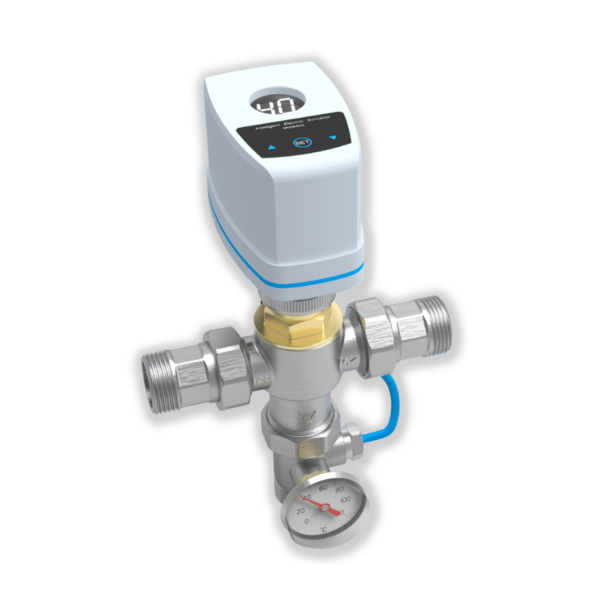
The 910064CC combines the reliability of a mechanical thermostatic mixing valve with the precision of an integrated electric actuator. An LCD display lets users monitor and adjust the outlet water temperature directly, and an optional networking feature enables remote temperature management through IoT-enabled applications. It is certified to CE, WRAS, and RoHS.
| Specification | 910064CC |
|---|---|
| Valve body material | Brass |
| Voltage | DC 24V |
| Temperature accuracy | ±2.0°C |
| Hot water inlet temperature | 60°C to 65°C |
| Cold water inlet temperature | 10°C to 15°C |
| Maximum dynamic pressure | 5 bar |
| Minimum dynamic pressure | 0.5 bar |
910018CC Solar Water Heater Thermostatic Mixing Valve
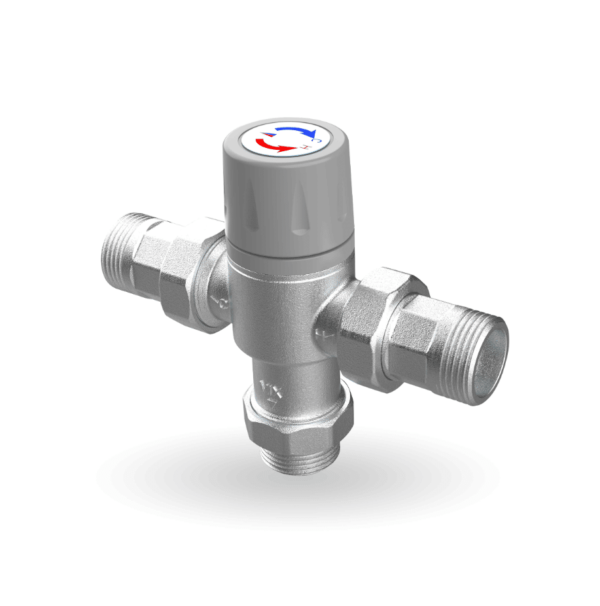
For systems using solar thermal energy, the 910018CC is designed to handle the high storage temperatures solar collectors produce. It is certified to EN1111, EN1999, and QB2606-2006, covering European sanitary and solar thermal standards as well as the Chinese national standard. Integral check valves and strainers on both inlets provide automatic shutoff if either supply fails, protecting against scalding.
| Specification | 910018CC |
|---|---|
| Available sizes | DN15, DN20, DN25, DN40 |
| Standards | EN1111, EN1999, QB2606-2006 |
| Valve body material | Nickel-plated brass, copper valve core |
| Temperature adjustment range | 30°C to 65°C |
| Temperature accuracy | ±2.0°C |
| Highest working temperature | 95°C |
| Maximum static pressure | 10 bar |
| Maximum dynamic pressure | 5 bar |
“When people evaluate hydronic floor heating, they focus almost entirely on the heat source and forget the mixing valve. But the flow temperature you deliver to the floor is what determines whether the system is genuinely efficient. Send water in too hot and you waste energy and risk damaging the floor finish. The valve is a small part of the total budget, yet it directly controls the temperature every square meter of that floor receives. That is why we build ours to hold accuracy within two degrees, and why I always tell installers to specify the mixing valve as carefully as they specify the heat pump.”
— Maggie Shen, Director of Legom
Building a Complete Hydronic System
The hydronic floor heating system you are building needs quality components that last and are easy to maintain. Legom manufactures the full range of hydronic components in-house at its facility in Jiaxing, Zhejiang Province, including floor heating pipe, manifolds, thermal actuators, room thermostats, HVAC valves, and heat pumps, all supplied to partners in more than 90 countries. Contact the Legom team to discuss specifications, sizing, and OEM options for your project.
Frequently Asked Questions
Is hydronic floor heating more efficient than radiators?
Yes, in most cases. Hydronic floor heating runs at much lower water temperatures than radiators, typically 30 to 45°C compared with 60 to 80°C. This lower flow temperature means the heat source works less hard, which is particularly significant when paired with a heat pump, as heat pumps become substantially more efficient at lower output temperatures. The large radiant surface of the floor also delivers heat more evenly than a radiator, eliminating the hot and cold spots that force people to overheat a room to feel comfortable.
Why does a hydronic system need a thermostatic mixing valve?
The mixing valve controls the temperature of the water actually entering the floor loops. A boiler or heat pump may produce water hotter than the floor should receive, and sending water in too hot wastes energy and can damage certain floor finishes. The mixing valve blends hot supply water with cooler return water to deliver a controlled, consistent flow temperature. Accuracy matters here: a valve holding to within ±2.0°C keeps the floor temperature stable and the system efficient. For domestic hot water, the same principle prevents scalding at the tap.
Can hydronic floor heating work with solar water heating?
Yes. Solar thermal collectors can feed a hydronic system, though they produce very high storage temperatures during peak sunlight, which is why a suitably rated mixing valve is essential. A valve certified to EN1999, the European standard covering thermostatic mixing valves for solar and storage water heating, is designed for these conditions. The Legom 910018CC, for example, handles a maximum working temperature of 95°C, making it suitable for installation directly at a solar storage tank outlet without needing a separate upstream temperature limiting device.
What makes hydronic floor heating sustainable?
Three things. First, it operates at low water temperatures, so the heat source consumes less energy to produce the same comfort. Second, it works with almost any heat source, including heat pumps, solar thermal, and geothermal, which allows a household to move away from fossil fuels without replacing the distribution system. Third, radiant heat warms occupants directly rather than heating air that escapes upward, so less energy is wasted overall. Combined with good insulation, this reduces both running costs and household carbon emissions over the system’s lifetime.
Reviewed by Maggie Shen, Director at Legom, on July 22, 2026. This article on hydronic floor heating was checked for technical accuracy, including the specifications of the 910064CC and 910018CC thermostatic mixing valves.