
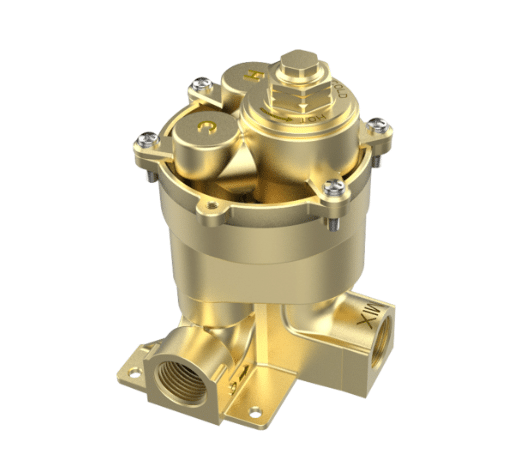
RFDN15 Thermostatic Water Mixing Valve
The Legom RFDN15 Thermostatic Mixing Valve is a self-operated wax-element thermostatic mixing valve certified to AS4032.2, AS4020, and Watermark — the primary Australian and New Zealand standards for thermostatic mixing valves in hot water supply systems. The RFDN15 uses a built-in high-precision wax thermostatic element to continuously adjust the ratio of hot and cold water inlet, delivering a controlled outlet temperature across a 30–50°C range at ±2°C accuracy. The valve body is manufactured from DZR brass compliant with drinking water standards, with a PSU plastic piston that provides strong limescale resistance and extended service life.
The RFDN15 is rated for a static maximum supply pressure of 1400 kPa and a dynamic maximum of 500 kPa, with an ideal working pressure of 300 kPa. Built-in stainless steel strainers and check valves are integrated into both inlets, eliminating the need for separate inline filtration or backflow prevention components. A temperature tamper-proof device and locking nut allow the outlet temperature to be set and secured after commissioning. Minimum required flow rate for stable thermostatic operation is 4 L/min.
Key Benefits
- AS4032.2, AS4020, and Watermark certified – Triple certification to the primary Australian standards for thermostatic mixing valves confirms the RFDN15 meets regulatory performance, materials, and construction requirements for use in code-compliant hot water supply installations in Australia and New Zealand. Watermark certification is a mandatory requirement for plumbing products installed in Australian regulated plumbing work
- DZR brass body compliant with drinking water standards – The dezincification-resistant brass body resists the corrosive effects of hot water and aggressive water chemistry over the long term, maintaining structural integrity in high-temperature supply conditions. DZR brass compliance confirms the valve materials are suitable for use in potable water systems
- PSU plastic piston with strong limescale resistance – The PSU (polysulfone) piston resists limescale buildup on the sliding surfaces of the thermostatic element assembly, maintaining smooth valve operation in areas with hard water supply. This directly extends the service life of the thermostatic element compared to standard piston materials
- Built-in stainless steel strainers and check valves – Integrated stainless steel filters at both inlets protect the wax thermostatic element from particulate contamination, and the built-in check valves prevent cross-flow between the hot and cold supply circuits. No separate inline strainers or backflow prevention components are required upstream of the valve
- Cold water failure shutoff and anti-scald protection – If the cold water supply fails while the valve is open, the RFDN15 automatically closes to prevent delivery of scalding untempered hot water to the outlet. This fail-safe behavior is a requirement of AS4032.2 and provides essential scald protection in residential and commercial hot water supply systems
- Temperature tamper-proof device with locking nut – Once the outlet temperature is set and confirmed, the locking nut secures the temperature adjustment bolt in position, preventing accidental or unauthorized changes to the set point. This is particularly important in installations serving children, elderly users, or public facilities where scald risk management is a requirement
- Wide pressure rating — 1400 kPa static, 500 kPa dynamic – The 1400 kPa static pressure rating accommodates high-pressure mains-connected installations, while the 500 kPa dynamic rating covers the full range of normal domestic and light commercial operating pressures. The ideal working pressure of 300 kPa aligns with typical Australian mains supply conditions
- Tool-free temperature adjustment – The outlet temperature can be adjusted using a standard wrench without special proprietary tools, simplifying commissioning and periodic recalibration in the field
Technical Specifications
| Parameter | Specification |
|---|---|
| Model | RFDN15 |
| Material | DZR brass |
| Standards | AS4032.2, AS4020, Watermark |
| Connection Size | BSPP 1/2″ (G 1/2″) — 3 ports |
| Static Maximum Supply Pressure | 1400 kPa |
| Dynamic Maximum Supply Pressure | 500 kPa |
| Ideal Working Pressure | 300 kPa |
| Maximum Inlet Pressure Ratio (H:C) | 2:1 |
| Hot Inlet Temperature Range | 60–99°C |
| Cold Inlet Temperature Range | 5–30°C |
| Outlet Temperature Range | 30–50°C |
| Temperature Control Accuracy | ±2°C |
| Min. Hot-Outlet Temperature Differential | 15°C |
| Minimum Flow Rate | 4 L/min |
| Thermostatic Element | Wax thermostatic element |
| Piston Material | PSU plastic |
| Integral Features | Stainless steel strainers + check valves on both inlets |
Application & Use Cases
- Residential hot water anti-scald protection in Australian installations – AS4032.2 certified TMVs are required by the Plumbing Code of Australia at the point of delivery for showers and baths in new residential construction and renovation projects. The RFDN15 meets this requirement, providing code-compliant scald protection at individual fixture supply connections or at the water heater outlet
- Aged care, childcare, and healthcare facilities – Facilities with vulnerable occupants are subject to mandatory TMV requirements under Australian state and territory regulations. The RFDN15’s AS4032.2 certification, tamper-proof locking mechanism, and cold water failure shutoff make it directly suited to these regulated environments
- Solar and electric storage water heating systems – The 60–99°C hot inlet temperature range covers the full output of electric storage heaters set above safe delivery temperature for Legionella control, as well as solar thermal collectors. The RFDN15 can be installed at the storage tank outlet to blend down to safe delivery temperatures before distribution
- Hard water regions requiring limescale-resistant components – The PSU plastic piston resists limescale adhesion on the thermostatic element’s sliding surfaces, making the RFDN15 particularly suited to installations in hard water supply areas where standard valve components are prone to early degradation from mineral buildup
- Commercial and institutional hot water distribution – Hotels, schools, sports facilities, and commercial buildings in Australian markets where Watermark certification is a mandatory requirement for plumbing product approval and where high static supply pressures up to 1400 kPa are present
- Pump-fed hot water supply systems – The valve’s dynamic pressure tolerance of 500 kPa and its response to sudden pressure changes accommodate pump-fed hot water circuits, including systems where pump cycling creates brief pressure fluctuations in the supply line
Installation Notes
- Thoroughly flush the pipeline before installing the RFDN15 to remove debris, swarf, and installation contaminants. Foreign matter entering the valve body before the built-in strainers are seated can damage the thermostatic cartridge sealing surfaces
- Install an isolation ball valve at both the hot and cold inlet connections to allow the valve to be isolated and serviced without draining the system. This is strongly recommended even where not explicitly required by code
- The hot inlet temperature must be at least 15°C above the desired mixed outlet temperature for effective thermostatic control. If the hot supply temperature is too close to the target outlet temperature, the wax element cannot blend effectively and outlet temperature instability will result. Hot water source temperature must be a minimum of 60°C
- The hot-to-cold inlet pressure ratio must not exceed 2:1 in either direction. Significant pressure imbalance between the hot and cold supplies affects mixing accuracy. Install a pressure-reducing valve on the higher-pressure supply if the ratio is exceeded
- Install the valve as close to the point of use as possible to minimize the length of uninsulated mixed-water pipework between the valve and the fixture. Longer runs increase heat loss and increase the time taken for mixed water to reach the outlet at the set temperature
- To adjust the outlet temperature: loosen the locking nut with a wrench, turn the temperature adjustment bolt — counterclockwise to increase, clockwise to decrease — and confirm the outlet temperature with a calibrated thermometer. Allow at least 1 minute of continuous flow at the adjusted setting before confirming the temperature is stable. Retighten the locking nut firmly after setting. Do not rotate the adjustment bolt while tightening the locking nut, as this will cause temperature deviation from the set point
- Inspect and clean the built-in stainless steel strainers periodically according to local water quality conditions. In areas with high sediment or hard water, more frequent cleaning intervals are recommended
Frequently Asked Questions
What certifications does the RFDN15 hold and which markets are they relevant to?
The RFDN15 is certified to AS4032.2, AS4020, and carries Watermark certification. AS4032.2 is the Australian standard for thermostatic mixing valves, specifying performance requirements for temperature control accuracy, fail-safe shutoff behavior, and endurance. AS4020 confirms the valve materials are suitable for contact with drinking water. Watermark is the mandatory Australian product certification scheme for plumbing and drainage products — without Watermark approval, a product cannot legally be installed in regulated plumbing work in Australia. These three certifications together confirm the RFDN15 is compliant for installation in Australian residential, commercial, and institutional plumbing systems.
Why must the hot water source be at least 60°C?
The RFDN15’s cold water failure shutoff function — which closes the valve to prevent scalding when cold supply is lost — only operates reliably when the hot inlet temperature is above 60°C. Below this temperature, the thermostatic element may not generate sufficient mechanical force to fully close the valve on cold supply failure. Additionally, AS4032.2 requires that hot water storage systems serving TMVs be maintained at or above 60°C to control Legionella bacteria growth in the stored water. Setting the storage temperature below 60°C compromises both the valve’s safety function and system hygiene requirements simultaneously.
What causes outlet temperature instability and how is it resolved?
Brief temperature variation of a few seconds following a sudden pressure change in the supply is normal thermostatic behavior — the wax element takes a short time to sense and respond to the changed inlet conditions. Persistent instability that does not settle is typically caused by pressure fluctuations from pump cycling in pump-fed systems. The recommended solution is to install a back-pressure valve or pressure tank at the pump outlet to dampen instantaneous pressure surges, or to replace the pump with a variable frequency drive unit that avoids the abrupt pressure changes caused by on-off switching. Blocked strainers causing intermittent flow restriction are another common cause — clean the built-in filters if instability coincides with reduced flow.
The outlet temperature is not shutting off when cold water is cut — what should I check?
Two conditions are required for the automatic hot water shutoff to function correctly on cold supply failure. First, the built-in strainers must be clean and free of blockage — if impurities have bypassed the strainer or the strainer is not installed, debris can lodge in the valve seat and prevent the sealing ring from closing fully. Second, the hot water source temperature must be above 60°C. If the hot supply temperature is below 60°C, the thermostatic element does not develop sufficient force to close the valve completely on cold supply loss. Check both conditions before investigating other causes.
What is the minimum flow rate, and what happens if it is not met?
The RFDN15 requires a minimum flow rate of 4 L/min through the valve for stable thermostatic operation. Below this rate, the wax thermostatic element does not receive sufficient water movement across its sensing surface to accurately measure and respond to the mixed outlet temperature, resulting in oscillation or drift from the set point. If the connected fixture or circuit consistently draws less than 4 L/min, contact the Legom team to discuss alternative valve options suited to low-flow applications.
OEM & ODM Customization
Legom supports OEM and ODM services for the RFDN15 Thermostatic Mixing Valve. Customization options include outlet temperature range, connection size, pressure rating, and body configuration. Custom material specifications and performance standard adaptations are available for specific market requirements. All customization projects are developed with the Legom engineering team to confirm suitability for the intended application. Contact us via WhatsApp or info@legomsmart.com.
User Manual
Product information last reviewed by the Legom Technical Team. For the most current specifications, refer to the official datasheet or contact our sales team.
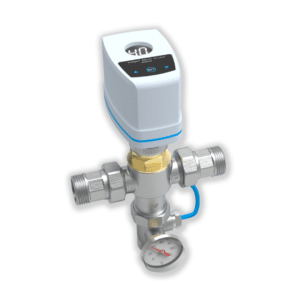


Custom OEM & ODM Solutions
Legom is a direct manufacturer offering end-to-end OEM and ODM services. With our in-house engineering and production capabilities, we work closely with distributors and system integrators to deliver fully customized solutions under strict NDA.
