
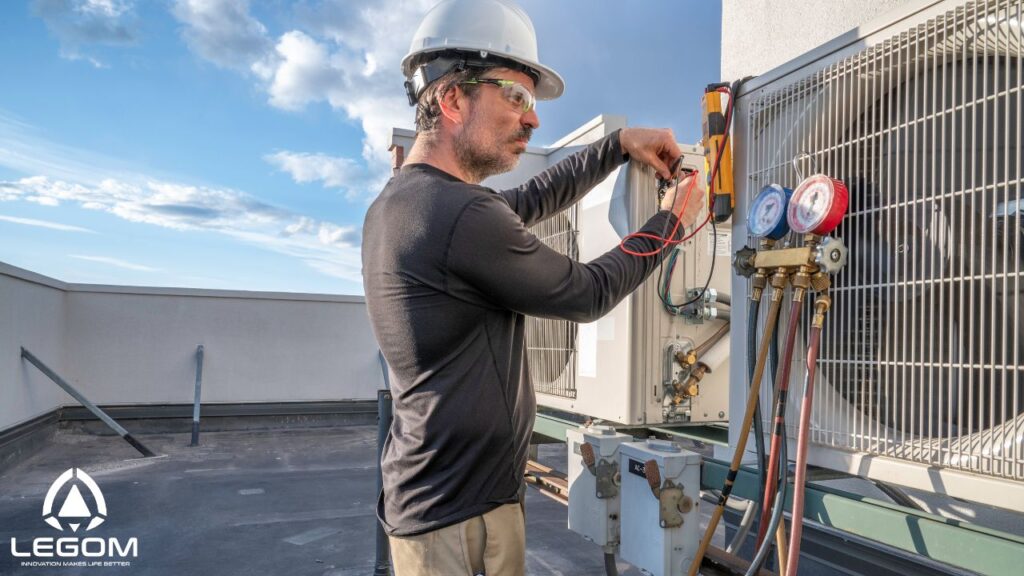
In the current era, hospitals require specialized HVAC (Heating, Ventilation, and Air Conditioning) systems to achieve specific benefits and adapt to their demanding environments. HVAC systems for hospitals must meet stringent standards for air quality, temperature control, and energy efficiency. In doing so, hospitals can ensure safety and comfort for patients, staff, and visitors alike.
Types of Primary HVAC Systems for Hospitals
There are several types of primary HVAC systems used in hospitals.
Centralized HVAC Systems
A centralized HVAC system handles heating, cooling, and ventilation throughout the entire hospital. These systems are called centralized because they are controlled from one central location, making them ideal for large facilities with complex requirements. They include chillers, boilers, and air-handling units (AHUs).
Centralized systems deliver consistent air quality and temperature across the environment and simplify maintenance. However, they require high initial costs and can be complex to retrofit or expand.
Decentralized HVAC Systems
Hospitals may also prefer decentralized systems, meaning individual units serve specific zones or areas within the hospital. These can include packaged units, split systems, or ductless mini-splits. Smaller hospitals, or specific areas like offices, often use these systems because they are more cost-effective than centralized setups and sufficient for small zones. They are also easier to install and maintain.
Air Volume Systems Used in Hospitals
Hospitals need reliable, well-controlled air systems, so they rely on several types of air volume systems depending on the area.
Variable Air Volume (VAV) System
This system adjusts the airflow based on the heating and cooling requirements of different hospital zones, working together with a central air handling unit.
Constant Air Volume (CAV) System
Unlike the VAV system, a CAV system provides a constant airflow while adjusting temperature to meet demand. This system is typically used in smaller areas or critical spaces such as operating rooms or laboratories.
Dedicated Outdoor Air Systems (DOAS)
A DOAS supplies fresh outdoor air to meet ventilation requirements while handling humidity control separately. It focuses on delivering proper ventilation and dehumidification.
The Benefits of Proper HVAC for Hospitals
Choosing the right and proper system is essential, because HVAC plays a critical role in hospital environments. The main benefits are as follows.
Prioritize Air Quality
Air quality plays a crucial role in hospitals, helping to prevent the spread of infections and protect vulnerable patients. To achieve this, hospitals use advanced filtration systems such as HEPA (High-Efficiency Particulate Air) filters, which are effective at removing pathogens and particulates from the air. Hospitals also need proper ventilation to ensure a consistent exchange of fresh outdoor air while maintaining a controlled indoor environment.
Implement Zoning
Hospitals contain many different zones, including patient rooms, operating theaters, laboratories, and administrative offices. Each zone has different HVAC needs based on its function. For example, operating theaters need precise temperature and humidity control, while administrative areas only need standard comfort levels. Implementing a zoning system allows the HVAC system to cater to specific needs, reducing energy consumption and enhancing comfort.
Utilize Energy Recovery Ventilation (ERV)
Hospitals must ensure good ventilation with proper handling of exhaust air. ERV systems recover energy from exhaust air, preconditioning incoming air and adjusting it to the desired quality, which improves efficiency without compromising air quality.
Incorporate Advanced Controls
Modern HVAC systems offer advanced controls and automation, including smart thermostats and occupancy sensors. Real-time monitoring allows precise adjustments based on occupancy and environmental conditions, significantly improving efficiency. These systems also include predictive maintenance tools that identify potential issues before they lead to costly breakdowns.
Maintain Proper Pressurization
Maintaining correct pressurization in critical areas is essential. Operating rooms must have positive pressure to keep contaminants out, while isolation rooms need negative pressure because they contain infectious agents. Regular checks and calibration of pressurization systems are necessary to ensure compliance with healthcare standards.
Air Purification Products for Hospital Environments
Because hospital HVAC depends so heavily on ventilation and air quality, dedicated air purification and fresh air units are a natural complement to the main system. The following Legom products are well suited to healthcare settings, where bacteria, viruses, fine particulates, and formaldehyde must all be controlled. Each can be integrated into the ventilation strategy described above, whether at the room level or as part of a fresh air supply.
The KJF-B01 Air Conditioner Companion is designed to work alongside an existing split air conditioner, adding hospital-grade purification to the conditioned air without taking up floor space. It removes more than 99.99% of bacteria, viruses, and allergens, more than 93.7% of formaldehyde, and 92.7% of PM2.5, all with zero filter consumables. This makes it well suited to patient rooms, consultation rooms, and offices that are already served by split air conditioning.
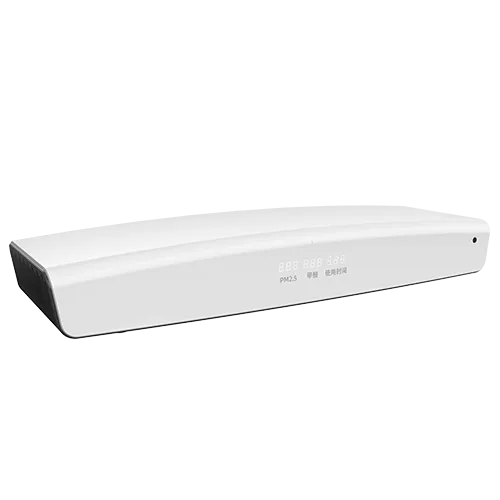
The KJF-B01 Air Conditioner Companion adds greater than 99.99% bacteria and virus removal to existing split air conditioning, ideal for patient and consultation rooms.
For continuous fresh, filtered air in smaller clinical spaces, the XFQT-60-01S Ion Catalytic Fresh Air Purifier provides a through-wall fresh air supply. It uses ion catalytic technology to deliver 60 m³/h of clean air while removing PM2.5 and formaldehyde and providing sterilization, all at a quiet 38 dB and just 12W. Its through-wall installation makes it practical for isolation rooms, small wards, and clinics that need a steady supply of filtered outdoor air independent of the central system.
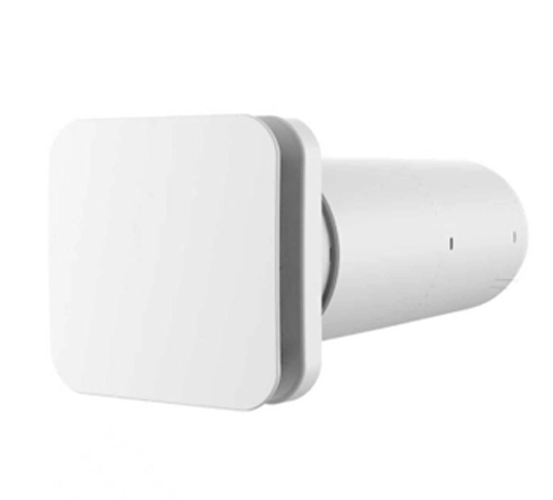
The XFQT-60-01S Ion Catalytic Fresh Air Purifier supplies continuous filtered fresh air through the wall, suited to isolation rooms and small wards.
For whole-room ventilation in larger areas such as waiting rooms, wards, and corridors, the XFDD2-500-02JP Ceiling-Mounted Fresh Air Ventilator supplies 400 to 500 m³/h of fresh air with 97 to 99% PM2.5 removal and built-in ionization. As a ceiling-mounted unit with heat recovery, it brings in filtered outdoor air while recovering heat from the outgoing stale air, supporting both the DOAS and ERV principles described above. It operates at a low noise level of 48 dB or less, which is important in patient areas.

The XFDD2-500-02JP Ceiling-Mounted Fresh Air Ventilator delivers up to 500 m³/h of filtered fresh air with heat recovery, suited to wards, waiting rooms, and corridors.
All three units are CE certified and available for OEM and ODM customization. You can explore the full range on the Legom air purifier page, or pair them with the hospital’s wider ventilation and humidity strategy.
“In a hospital, air quality is not a comfort feature, it is infection control. What we focus on for healthcare clients is layering the protection. The central HVAC handles pressurization and bulk air exchange, but room-level units like an AC companion that removes over 99.99% of bacteria and viruses add a second line of defense exactly where vulnerable patients are. The other priority is noise. A purifier in a patient room has to run continuously without disturbing rest, which is why we hold our fresh air units to under 48 decibels. Effective and quiet are not optional extras in this setting, they are the specification.”
— Maggie Shen, Founder of Legom
Conclusion
Having the right HVAC system in a hospital is vital to keep patients, staff, and visitors safe and comfortable. By selecting centralized or decentralized setups, applying proper pressurization, and using features like zoning, advanced controls, and dedicated air purification, hospitals can reduce infection risks and meet strict healthcare standards. This also helps lower energy use and operational expenses. Legom serves as an HVAC manufacturer, offering products specially designed for hospital environments.
Frequently Asked Questions
What type of air filtration do hospitals need?
Hospitals rely primarily on HEPA (High-Efficiency Particulate Air) filtration to remove pathogens and fine particulates from the air, as this is critical for preventing the spread of infection and protecting vulnerable patients. Beyond HEPA, many hospital areas benefit from additional purification stages such as UV-C sterilization, which deactivates bacteria and viruses, and activated carbon, which removes odors and volatile organic compounds. Room-level units that remove over 99.99% of bacteria and viruses can add a valuable second layer of protection on top of the central filtration system, particularly in patient rooms and isolation areas.
Why is pressurization important in hospital HVAC?
Pressurization controls the direction of airflow between rooms, which is essential for infection control. Operating rooms are kept at positive pressure, meaning air flows outward when a door opens, keeping airborne contaminants from entering the sterile environment. Isolation rooms holding infectious patients are kept at negative pressure, meaning air flows inward, preventing pathogens from escaping into the rest of the hospital. Maintaining and regularly calibrating these pressure relationships is a strict healthcare requirement, and any failure can directly compromise patient and staff safety.
What is the difference between VAV, CAV, and DOAS systems?
A Variable Air Volume (VAV) system adjusts the volume of airflow to match the heating and cooling demand of different zones, which is energy-efficient for areas with changing loads. A Constant Air Volume (CAV) system keeps airflow constant while varying temperature, which suits critical spaces like operating rooms and labs where stable air movement is required. A Dedicated Outdoor Air System (DOAS) focuses specifically on supplying fresh outdoor air and managing humidity separately from the main heating and cooling, ensuring proper ventilation and dehumidification. Hospitals often combine these systems across different areas based on each zone’s requirements.
Can air purifiers be added to an existing hospital HVAC system?
Yes. Dedicated air purification units complement rather than replace the central HVAC system. Room-level units such as air conditioner companions add filtration and sterilization to spaces already served by split air conditioning, without requiring ductwork changes. Through-wall fresh air purifiers supply continuous filtered outdoor air to individual rooms independently of the central system, which is useful for isolation rooms and small wards. Ceiling-mounted fresh air ventilators with heat recovery support whole-room ventilation while conserving energy. These units integrate with the existing ventilation, zoning, and pressurization strategy to strengthen overall air quality.
Reviewed and updated by the LEGOM Technical Team on June 28, 2026. This article covers HVAC systems for hospitals, including centralized and decentralized setups, VAV, CAV, and DOAS air volume systems, the benefits of proper hospital HVAC, and dedicated air purification products suited to healthcare environments, based on Legom’s experience as an HVAC and air purification manufacturer supplying partners in more than 90 countries.