

A freeze protection valve or also known as anti-freeze valve reduces the risk of flow blockage caused by freezing. With thermostatic technology, the valve reacts automatically to low water temperatures and prevents ice formation inside the pipe. For those who want to understand what this device is, how it works, and how to choose the right solution, this article explains the key points clearly and practically.
Many users try alternative methods to avoid frozen pipes, such as temporarily shutting down the system, closing isolation valves, or relying only on heat tracing. In practice, these methods are often inconvenient and ineffective—especially during unexpected power outages or system failures. In such conditions, a freeze protection valve provides a more reliable and passive safety solution.
Contents
- 1 What Is a Freeze Protection Valve?
- 2 How the Freeze Protection Valve Works
- 3 Freeze Protection Valves for Different Applications
- 4 Technical Parameters of a Freeze Protection Valve
- 5 Important Facts About Freeze Protection Valves
- 6 Part of the HVAC System as a Whole
What Is a Freeze Protection Valve?
In simple terms, a freeze protection valve is a special valve designed to prevent water from freezing inside a piping system. When the water temperature approaches the freezing point, the valve opens automatically and releases water from the pipe, reducing the risk of ice formation and excessive internal pressure.
Freeze protection valves are widely used in household systems, HVAC installations, heat pump circulation systems, and industrial applications. Because system requirements vary, it is important to select products with suitable specifications, materials, and temperature settings.
Freezing does not only occur during extreme winter conditions. In many systems, freezing risk appears when circulation stops, such as during power failure or control malfunction. Outdoor pipes connected to heat pumps, water heaters, or exposed installations are particularly vulnerable.
How the Freeze Protection Valve Works
Closing or isolating a valve does not prevent freezing. In many cases, freezing starts inside the pipe rather than in the valve body itself. For effective protection, water must be released before ice can form.
A freeze protection valve uses a temperature-sensitive element that reacts directly to the water temperature inside the valve. When the temperature drops to a preset value, the valve opens and drains water from the pipe. When the temperature rises again, the valve closes automatically.
Open and Close Function
-
When the water temperature drops to the opening point, the thermostatic element activates and the valve opens.
-
Water is discharged from the pipe, reducing freezing risk and internal pressure.
-
When the water temperature increases to the closing point, the valve closes and normal system operation resumes.
This automatic process does not require electricity and continues to function even during power outages.
Freeze Protection Valves for Different Applications
Not all freeze protection valves work in the same way. Different systems require different temperature settings and flow characteristics.
Freeze Protection Valve for Heat Pump Systems
In closed-loop heat pump circulation systems, freezing commonly occurs in outdoor piping when circulation stops unexpectedly. For this application, anti-freeze valves are designed to open at a relatively low temperature and drain the circulating water quickly.
A typical heat-pump anti-freeze valve opens when the water temperature drops below 3°C and closes again when the temperature rises above 4°C. These valves are designed for continuous water circulation systems and must be installed vertically with the outlet facing downward to allow proper drainage.
Key characteristics generally include:
-
Brass valve body suitable for outdoor conditions
-
Working pressure up to 10 bar
-
Ambient temperature resistance down to −30°C
-
High flow capacity to release water efficiently
This operating behavior is represented by the 910078NT Anti-Freeze Valves, which are designed specifically for heat pump circulation systems. These valves must be installed vertically with the outlet facing downward to allow proper drainage.

910078NT Anti-Freeze Valves
ANTI-FREEZE VALVES 910078NT — Working Principle
Anti-freeze valves are used in closed circulation systems of heat pumps to prevent water from freezing inside the pipes and causing damage to pipes and valves. This risk commonly occurs during unexpected power outages or system failures, when water circulation stops and outdoor pipes are exposed to low ambient temperatures.
When the water temperature in the system drops below 3°C, the ANTI-FREEZE VALVES 910078NT automatically open and drain the circulating water from the pipes. When the water temperature rises again above 4°C, the valve closes automatically and stops drainage.

Anti-Freeze Valves Operating principles
-

Freeze Protection Valve Normal Operation When Water Temperature Is Above 4°C
-
Freeze Protection Valve Automatic Drainage When Water Temperature Drops Below 3°C


ANTI-FREEZE VALVES 910078NT — Technical Characteristics
-
Valve material: EN12165 CW617N / C46500
-
Medium: Water
-
Maximum working pressure: 10 bar
-
Working temperature range: 0°C to 65°C
-
Ambient temperature range: −30°C to 60°C
-
Medium temperature (Opening): 3°C
-
Medium temperature (Closing): 4°C
-
Control accuracy: ±1°C
Dimensions
| DN | A(G) | L | L1 | L2 | H1 | H2 |
|---|---|---|---|---|---|---|
| 25 | 1” | 52 | 10 | 10 | 82.5 | 32.5 |
| 32 | 1¼” | 59 | 14 | 14 | 84.5 | 34 |
| 40 | 1½” | 62 | 15.5 | 15.5 | 86 | 35.5 |
KV Table — ANTI-FREEZE VALVES 910078NT
| DN | Thread | KV (m³/h) | Q3 (l/h) | Q0.5 (l/h) |
|---|---|---|---|---|
| 25 | G 1” | 55 | 0.3 | 3 |
| 32 | G 1¼” | 70 | 0.3 | 3 |
| 40 | G 1½” | 88 | 0.3 | 3 |
ANTI-FREEZE VALVES 910078NT — Installation
The valve must be installed vertically, with the outlet facing downward, to allow the drained water to flow out smoothly and without obstruction. It must be installed on the pipes connecting the outdoor heat pump to the indoor unit, as these pipes are the most susceptible to freezing in the event of a power failure or system malfunction. The anti-freeze valve should be installed away from heat sources to ensure proper operation. It is recommended to install anti-freeze valves on both pipes (flow and return) to reduce the risk of outdoor pipe freezing.

Recommended Installation of Anti-Freeze Valves on Heat Pump Flow and Return Pipes
-
Outlet must be installed at least 15 cm above ground level to prevent ice blockage
-
Maintain at least 10 cm clearance to ensure proper operation and drainage


Freeze Protection Valve for Sanitary and Water Heating Systems
For sanitary water, solar water heaters, and domestic heating systems, freeze protection valves often use progressive opening behavior.
In these systems:
-
The valve begins opening at around 1.6°C
-
Reaches full opening at approximately 4°C
-
Fully closes again at higher temperatures, such as 7°C
This design helps protect pipes from freezing while minimizing unnecessary water discharge in domestic applications.
This operating logic is characteristic of products such as the 910026NT Freeze Protection Valve, which is suitable for sanitary water, solar water heating, and domestic heating applications. This design helps protect pipes from freezing while minimizing unnecessary water discharge in domestic applications.
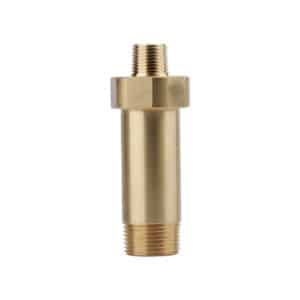
910026NT Freeze Protection Valve
910026NT Freeze Protection Valve — Working Principle
The 910026NT Freeze Protection Valve is designed to protect water pipes from freezing by automatically discharging water when the temperature drops. When the water temperature falls below 3.8°C, the thermostatic element opens the valve, allowing water to flow out of the pipe and reducing the risk of ice formation. Once the water temperature rises again to approximately 3.8°C, the valve closes automatically and normal operation resumes.
This progressive response helps prevent freezing damage while avoiding unnecessary water discharge in sanitary and water heating systems.
910026NT Freeze Protection Valve — Technical Parameters
| Parameter | Specification |
|---|---|
| Product Model | 910026NT Freeze Protection Valve |
| Material | Brass |
| Application | Sanitary; Heating and cooling system; Solar and electric water heating system |
| Initial Opening Temperature | 1.6°C |
| Full Opening Temperature | 4°C |
| Full Closing Temperature | 7°C |
| Working Temperature Range | −30°C to 80°C |
| Maximum Working Pressure | 1 MPa (10 bar) |
| Max Flow Rate | 20 L/min (300 kPa) |
| Control Accuracy | ±1°C |
| Thread Specification | G3/8-19, G3/4-14 |
Technical Parameters of a Freeze Protection Valve
When selecting a freeze protection valve, technical parameters must match the system requirements. A reliable supplier should clearly provide information such as:
-
Valve material (e.g., brass)
-
Opening and closing temperatures
-
Working temperature range
-
Maximum working pressure
-
Flow capacity
-
Control accuracy
-
Thread size or nominal diameter
Matching these parameters correctly helps ensure effective frost protection and long-term system reliability.
Important Facts About Freeze Protection Valves
Main Function
The primary function of a freeze protection valve is to prevent damage caused by frozen water inside pipes. By draining water when the temperature approaches freezing, the valve helps to:
-
Prevent ice formation
-
Reduce internal pressure buildup
-
Protect pipes, valves, and connected equipment
Using the correct valve can significantly reduce maintenance costs, spare-part replacement, and system downtime.
Product Testing and Reliability
Freeze protection valves must be tested for:
-
Temperature response accuracy
-
Pressure resistance
-
Sealing performance
High-quality products use proven sealing materials and are manufactured under controlled standards. Choosing experienced suppliers helps ensure consistent quality and reliable performance.
Can Freezing Still Occur?
A freeze protection valve greatly reduces the risk of freezing, but it does not completely eliminate ice formation in every situation. In some cases, a thin layer of ice may form on the inner pipe wall. This does not necessarily affect system performance.
However, excessive ice buildup can still cause blockage and pressure increase. Proper valve selection, correct installation, and maintaining system pressure are essential to minimize this risk.
Part of the HVAC System as a Whole
Freeze protection valves do not work alone. They are part of a complete HVAC or water-heating system that includes pumps, controls, piping, and other safety devices. Proper coordination between system components is necessary to ensure stable operation and effective freeze protection.
For this reason, selecting a supplier that understands HVAC applications and provides application-specific solutions is important. Manufacturers such as Jiaxing Legom Technology Co., Ltd. offer freeze protection valves designed for both heat pump circulation systems and sanitary water applications, along with other HVAC components.
Final Note
A freeze protection valve is a simple but critical safety component. When correctly selected and installed, it helps protect piping systems from freezing damage, reduces maintenance risks, and supports long-term system reliability.