
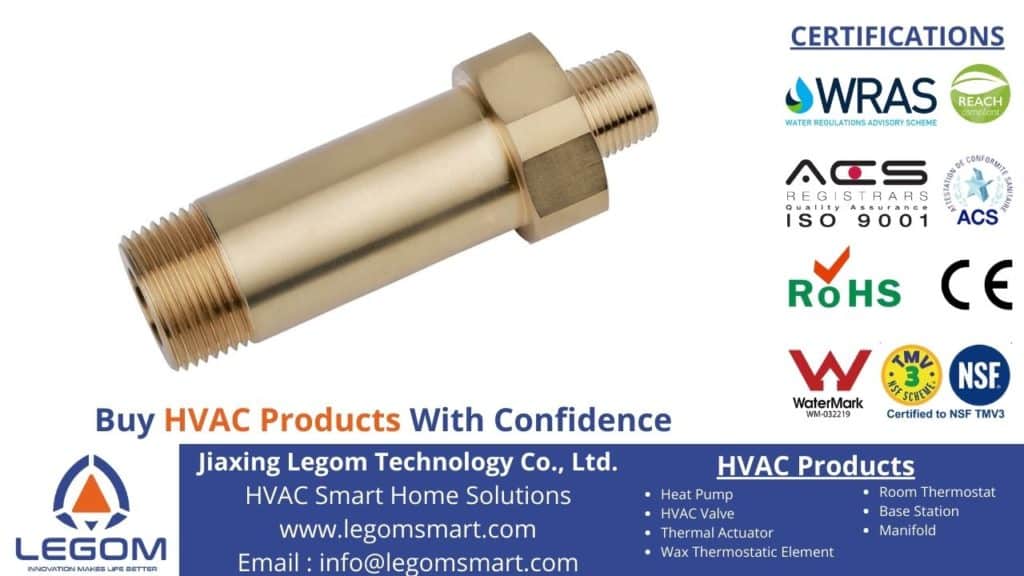
Scald protection valves play a critical role in ensuring safety and temperature control in hot water systems. This device is an important safety component in Heating, Ventilation, and Air Conditioning (HVAC) and domestic water-heating systems. Both household users and business operators must clearly understand how this valve works and how to select the most suitable solution for their applications.
So, is this your first time hearing about scald protection valves? Or are you already familiar with their use in household or industrial systems? Whether you realize it or not, the valves are widely used in hot water and sanitary systems, especially where the risk of excessively high water temperature exists.
Through a thermostatic safety mechanism, the valve prevents hot water from flowing when the temperature becomes dangerously high, thereby reducing the risk of scalding. This article explains what a scald protection valve is, how it works, its main functions, and important considerations when choosing a reliable product and supplier.
Contents
What Is a Scald Protection Valve?
Hot water systems used in domestic and industrial environments must be equipped with safety protection devices. A scald protection valve, also known as an anti-scald valve, is a thermostatic safety valve designed to prevent the risk of burns caused by excessively hot water.
In many regions, the installation of anti-scald protection devices is required by safety regulations, particularly in public facilities, residential buildings, and commercial applications.
Water heaters store and supply hot water for daily use, but users cannot always predict the temperature of the water delivered at outlets. Sudden exposure to water temperatures above safe limits—such as immediately after opening a tap—can cause serious burns.
Children and elderly users are especially vulnerable to scald injuries. In addition, excessively high water temperatures can damage plumbing fixtures and system components. For these reasons, controlling hot water temperature using a scald protection valve is essential for system safety and reliability.
How Does a Scald Protection Valve Work?
A scald protection valve works by automatically stopping water flow when the water temperature exceeds a preset safety threshold. Unlike thermostatic mixing valves, this type of valve does not mix hot and cold water.
When the water temperature rises to the protection temperature, the thermostatic element inside the valve closes, preventing hot water from passing through the valve. This immediate shut-off action reduces the risk of scalding at downstream outlets.
Once the water temperature drops below the protection temperature, the thermostatic element reopens the valve and normal water flow resumes.
Key operating characteristics include:
-
Direct detection of water temperature
-
Automatic shut-off at excessive temperatures
-
Automatic reopening when water returns to a safe range
-
Operation without electrical power
Temperature Control and Safety Considerations
Hot water systems are often designed to store water at higher temperatures to reduce the risk of bacterial growth, while delivery temperatures must remain within safe limits.
A scald protection valve provides an additional safety layer by blocking water flow when temperatures exceed acceptable limits. This protects users from burns while supporting stable and hygienic system operation.
Technical Parameters of the Scald Protection Valve
Understanding technical specifications is essential for selecting the correct scald protection valve. Reliable manufacturers provide transparent data to ensure compatibility with system requirements. An example is the 910028NT Scald Protection Valve, as shown below.
Technical Parameters – 910028NT Scald Protection Valve
| Parameter | Specification |
|---|---|
| Product Model | 910028NT |
| Valve Type | Thermostatic scald protection (shut-off) valve |
| Material | Brass |
| Medium | Water |
| Initial Opening Temperature | 36.7 °C |
| Full Opening Temperature | 43.3 °C |
| Full Closing Temperature | 35 °C |
| Working Temperature Range | −30 °C to 80 °C |
| Maximum Working Pressure | 1 MPa (10 bar) |
| Maximum Flow Rate | 20 L/min (at 300 kPa) |
| Control Accuracy | ±1 °C |
| Thread Specification | 3/8″ NPT, 3/4″ NPT |
| Applications | Sanitary; heating and cooling systems; solar and electric water heating systems |
This clear parameter definition helps engineers, installers, and procurement teams select the correct valve for their system design and safety requirements.

Scald Protection Valve Flow Characteristic Curve (Pressure Drop vs Flow Rate)

Scald Protection Valve Internal Structure and Dimensional Drawing
Applications of Scald Protection Valves
Scald protection valves are widely used in both residential and industrial installations where hot water safety is critical. Common applications include:
-
Domestic water heaters
-
Sanitary hot water distribution systems
-
Heating and cooling systems
-
Solar and electric water-heating installations
They are typically installed upstream of user outlets such as showers, bathtubs, kitchen faucets, and other hot water delivery points.
Choosing a Reliable Valves Supplier
Selecting a reliable valves supplier ensures product quality, accurate technical documentation, and long-term system reliability. Manufacturers with experience in HVAC and water-heating applications can provide professional guidance and customized solutions when required.
Jiaxing Legom Technology Co., Ltd. offers scald protection valves designed for sanitary and heating applications, supported by clear specifications and engineering support.
Final Note
A scald protection valve is a simple yet critical safety component in hot water systems. When correctly selected and installed, it helps prevent scald injuries, protects plumbing components, and supports stable and safe system operation. Understanding the valve’s working principle and technical parameters is essential to achieving long-term safety and reliability.