

How cold is Germany compared with countries like Russia? That is one of the more popular weather questions, and it matters because visitors need to prepare properly.
The short answer is that Germany is cold but not severe. Winter temperatures across most of the country range from -5°C to 5°C, which is considerably milder than Eastern Europe at the same latitude. What catches people out is not the depth of the cold but the damp, the grey, and how early it gets dark.
The coldest temperature ever recorded in Germany was -45.9°C at Funtensee in Berchtesgaden National Park in 2001. That figure needs context, though, and we will come to why.
Germany’s Climate at a Glance
| Season | Months | Typical range | What to expect |
|---|---|---|---|
| Winter | December to February | -5°C to 5°C | Snow, grey skies, dark by 4pm |
| Spring | March to May | 5°C to 18°C | Unpredictable, all four seasons in a week |
| Summer | June to August | 18°C to 28°C | Warm, occasionally hot, long evenings |
| Autumn | September to November | 5°C to 18°C | Stable early, cold arriving in November |
Germany sits in a transition zone, and that explains almost everything about its weather. The west is influenced by the Atlantic, which brings mild, damp, changeable conditions. The east is influenced by continental air masses, which bring colder winters and hotter summers. The country experiences both, depending on which influence dominates in a given week.
This is also why German winters vary so much from year to year. One winter brings weeks of snow, the next brings grey drizzle at 4°C and barely a frost.
Regional Differences
Saying “Germany is cold” flattens some real variation. The country is not large by continental standards, but the differences within it are noticeable.
The North Sea and Baltic coasts
Hamburg, Bremen, and the coastal regions have the mildest winters in the country. The sea moderates temperature, so hard frost is less common than inland.
What the coast has instead is wind. Persistent, damp, and cutting, which makes 3°C on the North Sea feel considerably colder than 3°C in a sheltered valley in Bavaria. Anyone visiting Hamburg in January should dress for wind rather than for the thermometer.
The west and Rhineland
Cologne, Düsseldorf, and the Rhine valley are among the mildest parts of Germany. The Atlantic influence is strongest here, and the valley itself shelters the region. Snow that settles for days is uncommon.
The east
Berlin, Dresden, and Leipzig experience a more continental pattern: colder winters, hotter summers, and less rainfall than the west.
Berlin in January typically sits around 0°C, with cold spells pushing well below that. The difference between Berlin and Cologne in winter is modest on paper but noticeable in practice, and it grows as you move further east.
The south and Bavaria
Munich and southern Bavaria sit at higher elevation, which makes them colder than the northern lowlands despite being further south. Munich averages around -1°C in January, colder than Hamburg.
This catches visitors out regularly. People assume south means warmer, and in Germany it often does not, because altitude matters more than latitude across such a short distance.
The Alps and the mountain regions
The Bavarian Alps, the Black Forest, the Harz, and the Erzgebirge all experience genuine mountain winters with reliable snow.
Zugspitze, Germany’s highest point at 2,962 metres, has a weather station that records conditions comparable to Arctic regions: annual average around -4.8°C, snow for most of the year, and winter temperatures regularly below -20°C.
Funtensee and the record
Now the context that the -45.9°C figure needs.
Funtensee is not a town. It is a small lake in a natural sinkhole in the Berchtesgaden Alps, and it gets that cold for a specific geographical reason: cold air is denser than warm air, so it drains downhill and collects in the basin with nowhere to escape. The surrounding mountains trap it, and on clear still nights the temperature in the hollow plunges far below anything the surrounding region experiences.
This is the same phenomenon that makes Peter Sinks in Utah one of the coldest places in the United States. Neither is somewhere people live. They are terrain features that concentrate cold.
So the German record is real, but it tells you nothing about German winters. No inhabited place in Germany approaches it.
When to Visit
For those planning a holiday in Germany, studying the weather belongs near the top of the to-do list. We cannot control it, but we can arrive at a sensible time.
Low season: winter
December, January, and February bring the fewest visitors and the coldest three months in a row. Temperatures range from -5°C to 5°C, snow falls in most regions, and the sun sets as early as 4pm, so the nights are long.
There is an exception worth knowing about. Germany’s Christmas markets run through Advent, and during that period cities that would otherwise be quiet become genuinely busy. Nuremberg, Dresden, Cologne, and dozens of smaller towns fill up. So “low season” applies to January and February more than December.
Shoulder season: spring and autumn
Autumn runs from September through November, and spring from March until May.
Autumn weather is comparatively stable, with the cold arriving properly in November. Spring is far less predictable, mixing snow, hail, and sunshine within the same week. There is no reliable way to know which will come first.
Germans have a phrase for April weather doing whatever it likes, and it exists because the phenomenon is so consistent.
Peak season: summer
June through August brings the friendliest weather and the longest days, with clear skies that allow full outdoor activity. Evenings stay light until well past 9pm in June.
Everyone will tell you summer is the best time to visit, and in weather terms they are right. However, at that time everything is more expensive and the popular places are crowded.
Spring is a good second choice with proper preparation for the surprising weather. Late May in particular often delivers warm days without the summer crowds.
What to Pack
For a German winter, the principle is layers rather than one thick coat.
A waterproof outer layer matters more than an extremely warm one. German winters are damp, and wet clothing loses insulation quickly.
Proper footwear with grip. Cities grit main streets but side streets and paths get icy, and German cities are places you walk around in.
Hat, gloves, scarf. The cold is manageable but the wind is not, particularly in the north.
Something lighter for indoors. German buildings are heated thoroughly. You will be uncomfortably warm in a shop or a restaurant wearing what was appropriate outside.
Fighting the Cold with Food
This is one of the pleasures of visiting a place in the cold season. Food served hot tastes considerably better when the weather is miserable, and Germany has a substantial repertoire for exactly this.
Bouletten. A meat-based dish, essentially a seasoned patty, served in bread with mustard. Gravy can be added if you prefer something wet and creamy, and mashed potatoes work as an additional carbohydrate source. In Berlin they are a staple.
Eintopf. A favourite of most Germans because it is straightforward to make. The word means “one pot”, and that is exactly what it is: a thick soup with plenty of vegetables, to which sausage or meat can be added. Eintopf is meant to be a complete meal in itself, which saves preparation time. No other plates, no other bowls, unless you want dessert afterwards.
Glühwein. Worth mentioning because it is inseparable from German winter. Hot spiced wine, sold at every Christmas market, served in a mug you pay a deposit on and return.
Grünkohl. A northern German kale dish, typically served with sausage, and traditionally eaten after the first frost, which is supposed to improve the flavour of the kale.
How German Homes Are Heated
Along with the winter food, German homes rely on heating systems designed for a long, damp, moderately cold season.
The common method is central heating, which is an efficient way to warm a building because it operates from a central controller. The temperature can be set to whatever the household prefers, and rooms that are rarely used can be turned down individually.
Controllers can also run an automatic timer, and the sensor built into the device holds the temperature rather than simply switching on and off around it.
What actually produces the heat
Historically, gas. Germany relies heavily on natural gas for domestic heating, more so than many of its neighbours, with oil boilers still common in older rural properties and district heating widespread in cities, particularly in the east where it was built out extensively.
That picture is changing, and faster than most countries.
The heat pump transition
Germany has made heat pumps central to its building energy policy. The Gebäudeenergiegesetz, the Building Energy Act, sets requirements for newly installed heating systems to draw a substantial share of their energy from renewable sources, with subsidy programmes supporting the switch.
The details have been debated and revised, and implementation timelines differ between new buildings and existing ones, so anyone planning an installation should confirm the current rules and available funding rather than relying on figures published earlier.
What is not in doubt is the direction. German heat pump installations have grown substantially, and the country represents one of Europe’s largest markets for the technology.
Why German winters suit heat pumps well. The climate is genuinely favourable. Winter temperatures mostly sit between -5°C and 5°C, which is comfortably within the range where an air source heat pump operates efficiently, unlike Finland or interior Russia where output declines significantly. Germany also has a large stock of buildings with existing hydronic heating, meaning a heat pump can replace a boiler without rebuilding the distribution system. The main obstacle is not climate but emitters: radiators sized for a gas boiler expect 70 to 80°C water, and that pushes a heat pump into its least efficient range.
The radiator problem
This deserves explaining, because it determines whether a German conversion delivers what was expected.
A heat pump becomes markedly more efficient the lower the water temperature it must produce. A unit achieving a COP of 4.5 at 35°C flow achieves around 3.6 at 45°C, and considerably less at 70°C.
Radiators installed for a gas boiler were sized on the assumption of very hot water. Connect a heat pump to them unchanged and the system works while costing far more to run than the specification suggested. Nothing has failed; the mismatch is the problem.
Three routes resolve it: replace the emitters with underfloor heating, oversize the radiators so they deliver the same output at 45 to 55°C, or improve insulation so demand falls and lower temperatures suffice. In German housing stock, a combination of the second and third is frequently the most economical.
Underfloor heating
Underfloor heating operates at 30 to 45°C, which is precisely where a heat pump performs best. That is why the two are so consistently specified together in German new construction.
There is a comfort dimension too. In a climate where floors are cold underfoot from November through March, a warm floor changes how a room feels in a way a radiator on one wall does not.
Zone Control and the Empty Room
The point about turning down rarely used rooms deserves expanding, because it is where most of the saving in a German home actually sits.
Heating only the rooms in use, and holding bedrooms cooler than living areas, removes more waste in a multi-room property than any scheduling adjustment. In a hydronic system this requires a manifold with a thermal actuator on each circuit and a room thermostat per zone.
One qualification worth knowing: unheated rooms are not free of heat. Warmth moves through walls and floors from adjacent zones, so a room set well below its neighbours still receives some. The saving is real but smaller than a simple calculation suggests.
Germany Compared
| Country | Typical winter | Record low |
|---|---|---|
| Germany | -5°C to 5°C | -45.9°C (sinkhole) |
| Poland | -5°C to 2°C | About -41°C |
| Finland | -10°C to -30°C | -51.5°C |
| Ireland | 2°C to 8°C | About -19°C |
| Russia | Widely variable, extreme in Siberia | About -68°C |
Germany sits comfortably in the middle. Colder and drier than Ireland, milder than Finland, broadly similar to Poland though with less severe eastern conditions.
For how Germany compares globally, see our guide to the coldest country in the world.
“Germany is one of the better climates for a heat pump anywhere in Europe, and the reason is simply that the winters are moderate. You are mostly working between minus five and plus five, which is well within the efficient range. The obstacle there is not the weather at all, it is the radiators. A lot of German housing has emitters sized for seventy-five degree water from a gas boiler, and if nobody addresses that before the heat pump goes in, the owner gets a system that works and bills that disappoint. That conversation belongs before the sale.”
— Maggie Shen, Director of Legom
Supplying the German Market
Good hot food and a well-specified heating system remove most of the worry about German winters. The technology is capable, and the climate is not extreme.
Legom manufactures heating components at its facility in Jiaxing, Zhejiang Province, and supplies partners in Germany among more than 90 countries.
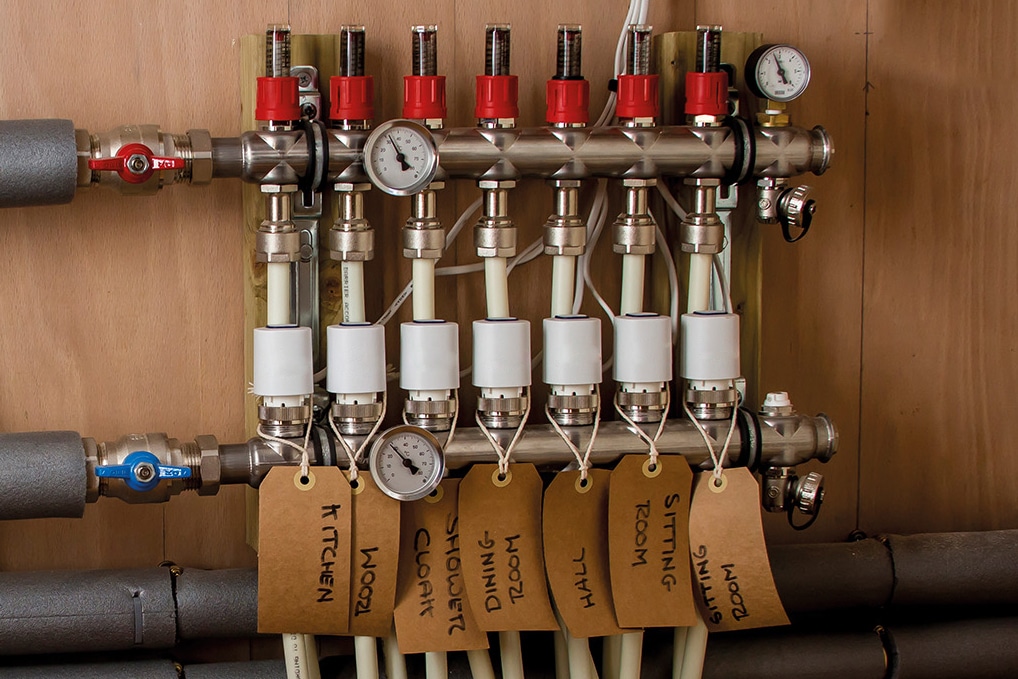
Legom Thermal Actuators Supplied to Germany
The range covers air-to-water heat pumps from 5 kW to 16 kW using R32 refrigerant, floor heating pipe with oxygen barrier protection to DIN 4726, manifolds, thermal actuators compliant with EN 60730, room thermostats, base stations, and HVAC valves.
All products carry CE and RoHS certification. OEM and ODM services cover branding, housing colour, display language, and packaging for partners supplying under their own name.
You can consult with us to specify a suitable heating system for a German installation.
Frequently Asked Questions
How cold does Germany get in winter?
Across most of the country, winter temperatures range from -5°C to 5°C between December and February. Munich and southern Bavaria are colder than the northern lowlands because of elevation, averaging around -1°C in January, while Hamburg and the coast are milder but windier. Berlin and the east see a more continental pattern with colder spells. Snow falls in most regions, though how long it settles varies considerably year to year.
What is the coldest temperature ever recorded in Germany?
-45.9°C at Funtensee in Berchtesgaden National Park in 2001. That figure needs context, however. Funtensee is a small lake in a natural sinkhole, not a settlement, and it reaches such temperatures because cold air is denser than warm air, so it drains downhill and pools in the basin with no way to escape. No inhabited place in Germany approaches that. It is a terrain feature rather than a representative climate reading.
Is southern Germany warmer than northern Germany?
Not in winter, which surprises most visitors. Munich averages around -1°C in January while Hamburg sits closer to 1°C, because southern Bavaria is at considerably higher elevation. Altitude matters more than latitude across a distance as short as Germany’s north-south span. The north is milder but windier and damper, and the coastal wind can make 3°C feel colder than a still -2°C in a sheltered Bavarian valley.
When is the best time to visit Germany?
Summer, from June to August, has the friendliest weather and the longest days, though prices rise and popular places fill up. Spring, particularly late May, is a strong second choice with warm days and fewer crowds, provided you prepare for unpredictable weather. Winter is quietest overall except during Advent, when Christmas markets make December considerably busier than January or February.
Do I need special clothing for a German winter?
Layers rather than one thick coat, and a waterproof outer layer matters more than an extremely warm one, since German winters are damp and wet clothing loses insulation fast. Bring footwear with grip, because side streets and paths get icy even where main streets are gritted, and German cities are walkable. Include something lighter for indoors, as buildings are heated thoroughly and you will overheat in outdoor clothing.
How do Germans heat their homes?
Natural gas has historically dominated, with oil boilers still common in older rural properties and district heating widespread in cities, particularly in the east. Central heating with a controller is the standard arrangement, allowing the household to set the temperature and turn down rarely used rooms. That picture is changing as heat pump installations grow rapidly under building energy policy that requires new heating systems to draw substantially on renewable sources.
Do heat pumps work well in German winters?
Yes, and the climate is genuinely favourable. Winter temperatures mostly sitting between -5°C and 5°C fall comfortably within the range where air source heat pumps operate efficiently, unlike far northern climates where output declines significantly. Germany also has extensive existing hydronic heating, so a heat pump can replace a boiler without rebuilding the distribution. The main obstacle is emitters rather than weather: radiators sized for a gas boiler expect very hot water and push a heat pump into its least efficient range.
Why is Germany’s weather so changeable?
Because the country sits in a transition zone between two competing influences. The Atlantic brings mild, damp, changeable conditions from the west, while continental air masses bring colder winters and hotter summers from the east. Which dominates varies week to week and year to year, which is why one German winter brings weeks of snow and the next brings grey drizzle at 4°C with barely a frost.
Does it snow in Germany?
Yes, in most regions, though how much and how long it settles varies enormously. The Alps, Black Forest, Harz, and Erzgebirge have reliable snow through winter. Berlin and the east see it regularly. The Rhineland and the coast get snow that often melts within days. Zugspitze, the highest point at 2,962 metres, carries snow for most of the year with an annual average around -4.8°C.
Reviewed by Maggie Shen, Director at Legom, on September 14, 2026. This article was reviewed for accuracy, including the geographical context behind Germany’s record low temperature and the relationship between existing radiator sizing and heat pump efficiency in German housing stock.