
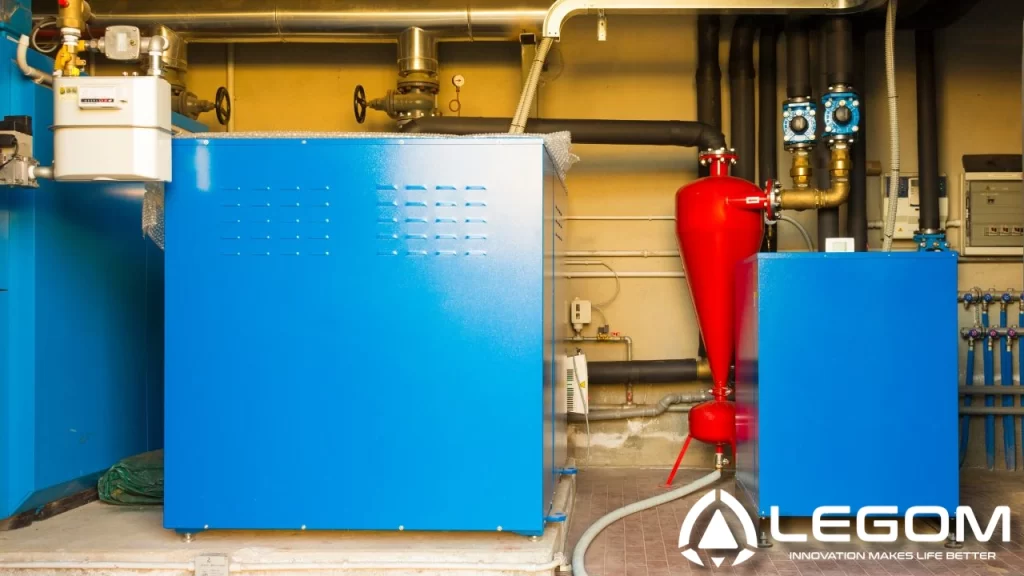
Have you ever heard about geothermal heat pumps? This system utilises the constant temperature of the earth below the surface to regulate indoor temperatures. The ground beneath us maintains a relatively stable temperature throughout the year, typically ranging from 7°C to 24°C (45°F to 75°F) depending on location and depth, far more consistent than outdoor air which swings widely between seasons.
The operation of geothermal heat pumps is straightforward, involving three main functions: heat exchange, heating mode, and cooling mode. The system type depends on the conditions around your building, and there are three: open-loop, closed-loop, and direct exchange. This guide explains each, what each requires, and how to judge whether geothermal is the right choice for a given site.
How Geothermal Heat Pumps Work
The principle is the same as any heat pump. A refrigeration cycle moves heat from one place to another rather than generating it by burning fuel, which is why efficiency exceeds 100%.
What distinguishes geothermal is the source. Instead of drawing heat from outdoor air, it draws from the ground or from groundwater. In winter, heat is extracted from the earth and delivered into the building. In summer the cycle reverses, and heat from the building is rejected into the ground.
The advantage follows directly from the physics. Air temperature can fall to -15°C or lower on a winter night, so an air-source unit extracts heat from a progressively colder source as conditions worsen. Ground temperature a few metres down stays near 10°C year-round regardless of the weather above. A geothermal unit therefore works from a warmer and more stable source precisely when heating demand peaks, which is why it achieves higher and more consistent efficiency, typically producing three to five units of energy for every unit of electricity consumed.
The same stability helps in summer, when rejecting heat into ground at 10°C is considerably easier than rejecting it into air at 35°C.
Open Loop System in Geothermal Heat Pumps
Open-loop systems are often preferred where conditions allow, because installation costs are lower than closed-loop alternatives. These systems require less piping and drilling, making them particularly suitable for large commercial or industrial applications. An open-loop system uses groundwater from wells or surface water bodies such as ponds as the heat exchange medium.
The word “open” is the key to understanding it. Water is drawn from a source, passed through a heat exchanger where heat is transferred to or from the refrigerant, then returned to its origin or discharged. The water itself is not recirculated in a sealed circuit; fresh water is continuously drawn and returned.
If you are in an area with abundant groundwater or a suitable water source, this system could be a highly feasible option. It suits large commercial buildings such as offices, schools, hospitals, manufacturing and food processing facilities, and residential complexes including apartments and condominiums.
What determines whether an open loop is viable
Four conditions must be satisfied, and failing any one of them rules the approach out regardless of how attractive the cost saving looks.
Water flow rate. The source must sustain sufficient flow to maintain efficiency, and it must do so during dry periods rather than only when the water table is high. Sizing against a favourable season is a common and expensive miscalculation.
Water quality. This is where open-loop systems most often disappoint, and it deserves emphasis. Groundwater carries dissolved minerals, and depending on the aquifer it may be hard, acidic, or high in iron. Hard water deposits scale on the heat exchanger surface, which insulates it and progressively reduces heat transfer. Iron content causes fouling. Acidic water corrodes. Test for corrosion potential, scaling potential, and microbial growth before designing the system, not after commissioning it.
Discharge provision. The water has to go somewhere after use. Returning it to the aquifer through a discharge well, releasing it to surface water, or another route all carry their own requirements, and the volume involved is substantial.
Abstraction permissions. Most jurisdictions regulate groundwater abstraction and discharge, sometimes strictly. Permits may limit volume, require monitoring, or be refused entirely in areas under water stress. Establish the regulatory position early, because it can invalidate an otherwise sound design.
Components and efficiency
The main components of an open-loop system are the water source, the pump, the heat exchanger, and the heat pump unit. The heat exchanger transfers heat between the water and the refrigerant, while the heat pump unit compresses and expands the refrigerant to provide heating or cooling.
Efficiency is generally the highest of the three configurations, because heat transfer occurs directly between groundwater and refrigerant with no intermediate loop fluid and no plastic pipe wall in between. Groundwater also arrives at a stable temperature straight from the aquifer.
Maintenance requirements
Open-loop systems need more attention than closed-loop, and this should be factored into the decision rather than discovered later.
Test water quality periodically for corrosion, scale, and microbial growth. Clean the heat exchanger on a schedule, since even moderate scaling reduces performance measurably. Inspect the pump and well components, which are working with raw groundwater rather than treated fluid. And minimise water usage to avoid waste and to stay within any abstraction limits.
| Aspect | Open loop |
|---|---|
| Heat exchange medium | Groundwater or surface water, not recirculated |
| Installation cost | Lower than closed loop where water is available |
| Efficiency | Highest of the three, direct heat transfer |
| Site requirement | Abundant water source plus discharge route |
| Maintenance | Higher, water quality driven |
| Regulatory | Abstraction and discharge permits usually required |
| Best suited to | Large commercial and industrial sites with water access |
Closed-Loop Geothermal Heat Pumps
The closed-loop system is the most common type of geothermal heat pump. It uses a network of pipes, either buried underground or submerged in water, to circulate a heat-transfer fluid, typically a mixture of water and antifreeze. The system transfers heat between the ground and the building, providing both heating and cooling.
The distinction from open loop is that the same fluid circulates permanently in a sealed circuit. It never contacts groundwater, which removes water quality from the equation entirely and is the main reason closed loop dominates despite higher installation cost.
Horizontal loops
Pipes are laid in shallow trenches, typically 1 to 2 metres deep (3 to 6 feet), across a large area of ground. Excavation is straightforward and cheap compared with drilling, making this the lower-cost option where land is available.
The constraint is area. A horizontal loop needs a considerable amount of accessible ground that can be excavated and then left undisturbed, which rules it out for most urban plots. Being shallower, it also experiences more seasonal temperature variation than a deep borehole, so performance is slightly less consistent.
A slinky coil variation coils the pipe within the trench, fitting more pipe length into less trench and reducing the excavation required, at the cost of slightly lower efficiency per metre of pipe.
Vertical loops
Boreholes are drilled to depths of roughly 30 to 120 metres (100 to 400 feet), with pipe inserted and the borehole grouted. This suits smaller properties, rocky terrain, and larger commercial applications where the required loop length would be impractical horizontally.
The land requirement is minimal, which is the main advantage. The cost is higher because drilling equipment and expertise are involved, and geology matters: some ground conditions drill easily and others do not, with substantial cost implications either way. Deeper ground also delivers more stable temperature, so vertical loops perform more consistently through the seasons than horizontal ones.
Directional drilling allows loops to be installed with minimal surface disturbance, which is useful where landscaping or existing structures must be preserved.
Pond and lake loops
Where a suitable body of water exists on the property, coils can be submerged in it. Installation cost is the lowest of any closed-loop configuration since neither excavation nor drilling is needed. The water body must be deep enough and large enough to provide adequate thermal capacity without freezing solid or overheating.
Performance and lifespan
Although installation costs exceed those of conventional HVAC systems, closed-loop geothermal heat pumps are highly efficient, producing three to five units of energy for every unit of electricity consumed. Operating costs are correspondingly low, offering significant long-term savings.
Lifespan is a genuine advantage worth understanding correctly, because it applies unevenly. The buried ground loop, being inert plastic pipe with no moving parts, can last 50 years or more. The heat pump unit itself, containing a compressor and controls, typically lasts 20 to 25 years like any other heat pump. So the expensive, disruptive part of the installation outlives several replacements of the mechanical equipment.
Components
The main components include the underground loop which extracts heat, a heat exchanger which transfers heat from the loop fluid to the refrigerant, and the heat pump unit which compresses and expands the refrigerant to provide heating or cooling. A circulation pump moves fluid through the loop, and a control system regulates flow, temperature, and pressure.
Direct Exchange System in Geothermal Heat Pumps
The direct exchange system is less common and works by circulating refrigerant directly through copper pipes buried underground, eliminating the need for both an antifreeze solution and a separate water loop.
Because the refrigerant exchanges heat directly with the ground rather than through an intermediate fluid, thermal transfer is more efficient and the ground loop can be shorter. Copper also conducts heat far better than the polyethylene used in closed loops.
The trade-offs explain why it remains niche. Considerably more refrigerant is required to fill the buried circuit, which raises both cost and environmental exposure should a leak occur. Buried copper is vulnerable to corrosion in acidic or aggressive soils, and locating a leak underground is difficult and expensive. Fewer installers are experienced with the technology, and in some jurisdictions the volume of buried refrigerant raises regulatory questions.
Comparing the three configurations
| Factor | Open loop | Closed loop | Direct exchange |
|---|---|---|---|
| Medium in the ground | Groundwater | Water and antifreeze | Refrigerant |
| Pipe material | Well casing and pipework | Polyethylene | Copper |
| Installation cost | Lowest where water available | Higher | Moderate, shorter loop |
| Efficiency | Highest | High | High |
| Maintenance | Higher, water quality | Minimal | Low but corrosion risk |
| Main constraint | Water source and permits | Land or drilling access | Soil chemistry, installer availability |
| Prevalence | Commercial and industrial | Most common overall | Niche |
What Geothermal Actually Costs to Install
Being direct about this matters, because upfront cost is what most often decides against geothermal despite its efficiency.
The heat pump unit itself costs broadly what an air-source unit of similar capacity costs. The difference lies almost entirely in the ground works: excavation for horizontal loops, drilling for vertical boreholes, or well construction and discharge provision for open loop. Depending on site conditions, that ground work can equal or exceed the cost of the equipment.
Costs vary enormously with geology, access, and local drilling rates, which is why a site-specific quotation is the only meaningful figure. What can be said generally is that geothermal carries the highest upfront cost of any common heating technology and the lowest running cost, so the case rests on how long the owner intends to hold the property and whether incentives are available.
The disruption should also be weighed. Horizontal loops require excavating a large area of ground, which is straightforward on bare land and highly disruptive on established landscaping. Drilling requires rig access. Neither suits a finished urban property well.
Geothermal or Air Source: An Honest Comparison
Geothermal is the more efficient technology, and nothing here disputes that. But efficiency is one factor among several, and the practical comparison decides many more projects than the efficiency figure alone.
| Factor | Geothermal (ground source) | Air source |
|---|---|---|
| Efficiency (COP) | 3–5, very consistent | 3–4.5, declines in extreme cold |
| Upfront cost | Highest | Substantially lower |
| Ground works | Excavation, drilling, or wells | None |
| Land requirement | Significant, or drilling access | Space for one outdoor unit |
| Permits | Often required for drilling or abstraction | Rarely, beyond normal building rules |
| Retrofit suitability | Difficult in finished properties | Straightforward |
| Outdoor noise | None outside, equipment indoors | Fan and compressor noise outdoors |
| Ground loop lifespan | 50 years or more | Not applicable |
The gap has narrowed. The traditional case for geothermal rested partly on air-source units performing poorly in cold weather. That objection is far weaker than it once was. Modern cold-climate air-source units maintain useful output at ambient temperatures down to -35°C, which covers the great majority of populated cold regions. Geothermal still holds an efficiency advantage, but where once it was the only viable option in a cold climate, it is now the more efficient of two workable options, and the cost difference decides many projects.
Exploring Alternative Efficient Solutions
While geothermal heat pumps provide efficiency and sustainability, another viable and increasingly popular option is the air source heat pump. Air source systems are easier and more cost-effective to install, especially in existing buildings where extensive ground work is not feasible. They harness ambient outdoor air to deliver heating and cooling, offering substantial energy savings and environmental benefits without underground installation.

Air Source Heat Pump
Legom manufactures air-to-water air source heat pumps in capacities from 5 kW to 16 kW, achieving COP figures between 4.42 and 4.53 at standard test conditions and engineered to operate down to -35°C ambient. All run on R32 refrigerant with full DC inverter compressors and carry CE and RoHS certification. For a fuller treatment of how this technology works and where it suits, see our guide to air to water heat pumps, or compare the technologies in our guide to types of heat pumps.
Both technologies need the same distribution system
This is worth understanding for anyone weighing the two, because it means the decision affects only the heat source and not the rest of the installation.
Geothermal and air-source units alike produce hot water, which then circulates through the building. Both need a manifold distributing flow between floor heating pipe loops, a thermal actuator on each circuit, and a room thermostat per zone. Both perform best feeding low-temperature emitters such as underfloor heating.
A system designed around one can therefore accept the other later with the distribution unchanged, which is a useful hedge when budget forces a decision before the ideal solution is affordable.
“Geothermal is genuinely the more efficient technology and I would not argue otherwise. What I would say to anyone weighing it is that the comparison has shifted in the last decade. It used to be that in a cold climate you had ground source or you had a boiler, because air source simply gave up when it got properly cold. That is no longer true, and units rated to minus thirty-five degrees have changed the calculation. So the question is now less about whether air source can cope and more about whether the ground works are worth the efficiency difference on your particular site. On bare land before construction, often yes. On a finished property with established landscaping, very often no. And either way the pipework, manifolds, and controls inside the building are identical, so that part of the decision can wait.”
— Maggie Shen, Director of Legom
Frequently Asked Questions
What is the difference between open loop and closed loop geothermal?
An open loop draws groundwater from a well or surface water body, passes it through a heat exchanger, then returns or discharges it. The water is not recirculated. A closed loop circulates a sealed mixture of water and antifreeze through buried pipes permanently, never contacting groundwater. Open loop is cheaper to install where a suitable water source exists and achieves higher efficiency through direct heat transfer, but requires abstraction permits and more maintenance because water quality affects the heat exchanger. Closed loop costs more upfront but removes water quality from the equation entirely, which is why it is more common.
How efficient are geothermal heat pumps?
They typically produce three to five units of energy for every unit of electricity consumed, and importantly that efficiency stays consistent year-round. The reason is source stability: ground temperature a few metres down remains near 10°C regardless of weather, so the system extracts heat from a warm and predictable source even during the coldest weeks when heating demand peaks. An air-source unit, by contrast, works from a source that gets colder exactly when demand rises, so its efficiency varies more across the season.
How much land does a geothermal system need?
It depends on the loop type. A horizontal closed loop needs a substantial area of accessible ground that can be excavated and then left undisturbed, which rules it out for most urban plots. A vertical loop needs only enough space for drilling access, so land area is not the constraint, but drilling costs more and geology affects the price considerably. An open loop needs a productive water source plus a discharge route rather than land as such. If the site has neither land nor drilling access, air source is usually the practical alternative.
How long do geothermal heat pumps last?
The answer differs by component, and this is often quoted confusingly. The buried ground loop is inert plastic pipe with no moving parts and can last 50 years or more. The heat pump unit itself, with its compressor and controls, typically lasts 20 to 25 years like any other heat pump. So the expensive and disruptive part of the installation outlives several replacements of the mechanical equipment, which improves the long-term economics considerably once the ground works are done.
Why is water quality important in an open loop system?
Because groundwater passes directly through the heat exchanger rather than being isolated in a sealed circuit. Hard water deposits scale on the exchanger surface, which insulates it and progressively reduces heat transfer. High iron content causes fouling, and acidic water corrodes components. Test for scaling potential, corrosion potential, and microbial growth before designing the system rather than after commissioning, since an unsuitable water chemistry can make an otherwise well-designed open loop uneconomical to maintain.
Is geothermal better than an air source heat pump?
More efficient, yes. Better for every project, no. Geothermal delivers higher and more consistent efficiency because the ground is a warmer and more stable heat source than winter air. Against that, it costs substantially more upfront due to excavation, drilling, or well construction, requires land or drilling access, often needs permits, and is difficult to retrofit into a finished property. Modern air-source units operating to -35°C have narrowed the performance gap considerably. On bare land before construction, geothermal often justifies itself. On an established property, air source frequently wins on practicality.
Can geothermal provide cooling as well as heating?
Yes, and it does so particularly well. The cycle reverses in summer, rejecting heat from the building into the ground rather than into outdoor air. Because ground temperature stays around 10°C while summer air may be 35°C, the system rejects heat into a much cooler sink than an air-source unit can, so cooling efficiency is high. Some installations also use the summer heat rejection to help recharge the ground thermally for the following winter.
What is a direct exchange geothermal system?
One that circulates refrigerant directly through buried copper pipes rather than using an intermediate water and antifreeze loop. Heat transfer is more efficient because copper conducts far better than polyethylene and there is no intermediate fluid, so the ground loop can be shorter. It remains niche because it requires considerably more refrigerant in the buried circuit, buried copper is vulnerable to corrosion in aggressive soils, underground leaks are difficult to locate, and fewer installers have experience with it.
Does Legom manufacture geothermal heat pumps?
No. Legom manufactures air-to-water air source heat pumps in capacities from 5 kW to 16 kW, along with the manifolds, floor heating pipe, thermal actuators, room thermostats, and HVAC valves that make up a complete hydronic system. Those distribution and control components work equally with a geothermal or an air source heat source, since both produce hot water for the same wet system. If your project requires ground source equipment specifically, we can still supply the distribution side.
Reviewed by Maggie Shen, Director at Legom, on August 5, 2026. This guide to geothermal heat pumps was reviewed for technical accuracy, including open loop water quality requirements, loop lifespan figures, and the current performance comparison with air source systems.