
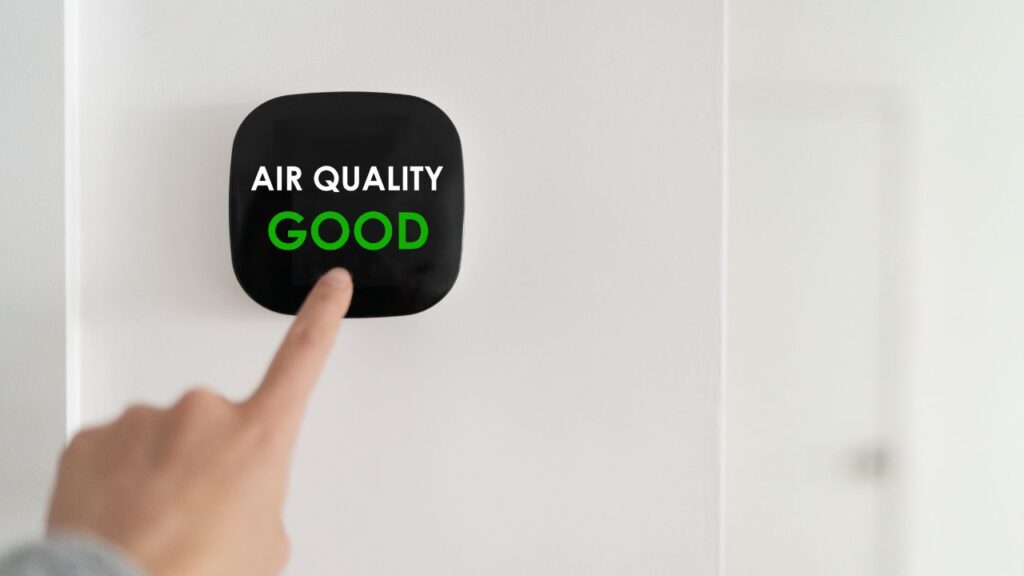
Finding a good indoor air quality (IAQ) solution is crucial for your health and comfort. Poor air quality can lead to health issues such as respiratory problems, allergies, and other long-term concerns. The health effects of poor IAQ are more significant than many people realize. You can learn more about specific health risks in our article on asthma triggers from indoor air, which covers how airborne pollutants affect the respiratory system directly.
Indoor air quality solutions include improving ventilation, using air purifiers, and installing a filtration system in your HVAC system. Improving ventilation can be done by opening interior doors, using bathroom and kitchen fans, opening windows when conditions permit, keeping furniture away from heating vents and baseboards, and using a mechanical HVAC system with a filtration system.
You can also use air purifiers with advanced filters, UV purifiers, media air cleaners, or electronic air cleaners. Installing a filtration system can be done by fitting UV lights in your furnace unit, replacing or cleaning filters as per the manufacturer’s instructions, and using an indoor air quality monitor to measure and track air quality at home. Poor IAQ can give immediate or long-term effects on your health, making it worthwhile to address systematically rather than reactively.
Finding the right indoor air quality solutions for your home requires identifying the specific problems affecting your space, understanding the available technologies, and implementing strategies that suit your actual needs and budget.
Identify Your Air Quality Concerns Before Choosing a Solution
Before exploring solutions, pinpoint the specific issues affecting your indoor air. Common problems include dust and allergens, high humidity levels, and volatile organic compounds (VOCs).
Dust and allergens can be triggered by pet dander, pollen, or mold. You should identify whether any of these triggers are present in your home and at what levels. High humidity can lead to mold growth and persistent dampness, which makes both the air and the building materials deteriorate faster. VOCs are released from everyday household products like paints, cleaning products, and furniture, and can accumulate to significant concentrations in poorly ventilated spaces.
You may also find that your home has poor ventilation in the HVAC system, which leads to stale air and increased pollutant buildup over time. By understanding the root cause of your air quality issue, you can select the most effective tools and techniques rather than investing in solutions that do not target the actual problem.
Select the Proper Air Purification System for Your Space
There are various types of modern air purification systems, each designed to target specific pollutants. Choosing the right one depends on the type of air quality problem you identified in your assessment. The table below compares the most common options to help you make the right decision.
| Purification Type | Best For | Key Advantage | Important Note |
|---|---|---|---|
| HEPA filter | Dust, pollen, pet dander, mold spores | Captures 99.97% of particles 0.3 microns and larger | Replace filters on schedule to maintain effectiveness |
| Activated carbon filter | Odors, smoke, VOCs, chemical vapors | Absorbs gases that HEPA cannot capture | Carbon layer saturates over time and needs replacement |
| UV-C light system | Bacteria, viruses, mold spores | Destroys microorganisms without chemicals | Works best combined with a particulate filter |
| Ionic purifier | Fine particles and dust | No filter replacement required | Some models produce trace ozone as a byproduct |
| Whole-home air purifier | All room types in a single building | Integrated with HVAC for comprehensive coverage | Higher upfront cost but covers the entire property |
Legom manufactures air purifiers using advanced filtration technology that removes airborne pollutants, allergens, and harmful microorganisms. Our units carry international product certifications and are designed for both residential and commercial spaces. If you are sourcing air purifiers in larger quantities, Legom also offers OEM and ODM solutions for businesses building their own brand.
Manage Humidity Levels and Improve Ventilation Effectively
Proper indoor humidity levels are important for maintaining good air quality and preventing the structural and health issues that come with excessive moisture. The ideal humidity level is between 30% and 50%. To reach and maintain this range, you can use dehumidifiers, humidifiers, and ventilation systems depending on the specific condition of your space.
A dehumidifier helps reduce excess moisture and prevents mold growth in damp environments such as basements or kitchens. A humidifier, on the other hand, adds moisture to the air in dry climates or during winter months when indoor air becomes uncomfortably dry. Proper ventilation ensures consistent airflow, which prevents dampness, reduces condensation, and flushes out stale, pollutant-laden air.
For detailed guidance on ventilation options for your home, you can read our article on home ventilation systems for fresh air all year round. Key ventilation components include exhaust fans in kitchens and bathrooms where moisture and odors accumulate, whole-house ventilation systems that provide consistent air exchange throughout the property, and the simple but effective option of opening windows and doors when outdoor conditions are suitable.
Use Natural Methods to Support Better Air Quality
Improving indoor air quality can also be done by incorporating natural methods alongside your mechanical solutions. Certain houseplants, such as snake plants and peace lilies, may help absorb some airborne toxins and contribute to a fresher indoor environment, though the effect is modest compared to active filtration systems. Think of them as a complement to, rather than a replacement for, proper ventilation and purification.
Using natural cleaning products is another practical step. Reducing your exposure to harmful chemicals by switching to eco-friendly cleaners directly lowers the concentration of VOCs in your home. Regular maintenance and monitoring of air quality are also important, as they allow you to catch problems early before they develop into persistent issues.
View this post on Instagram
Frequently Asked Questions
What is indoor air quality and why does it matter?
Indoor air quality (IAQ) refers to the condition of the air inside a building, particularly as it affects the health and comfort of the people who occupy it. Poor IAQ can result from a buildup of pollutants including dust, mold spores, pet dander, VOCs from cleaning products or furnishings, and inadequate fresh air circulation. The effects range from mild irritation such as headaches and dry eyes to more serious respiratory conditions with prolonged exposure. Because most people spend a significant portion of their time indoors, the quality of indoor air has a meaningful and direct impact on overall health and wellbeing.
What is the most effective type of air purifier for home use?
For most homes, a purifier that combines a HEPA filter with an activated carbon layer offers the broadest protection. The HEPA filter captures fine particles such as dust, pollen, and pet dander, while the activated carbon layer absorbs odors, smoke, and VOCs that the HEPA layer cannot trap. If the primary concern is bacteria or viruses, a unit with a UV-C light component adds a further layer of protection by neutralizing microorganisms. The right choice depends on your specific air quality concerns, the size of the room, and how frequently you are able to maintain and replace filter components.
What is the ideal indoor humidity level and how do I achieve it?
The ideal indoor humidity level is between 30% and 50% relative humidity. Below 30%, the air becomes uncomfortably dry and can irritate the respiratory tract and skin. Above 50%, moisture creates conditions that encourage mold growth, dust mites, and structural dampness. To maintain this range, use a dehumidifier in humid environments such as basements or coastal climates, and a humidifier during dry winter months when central heating lowers indoor humidity significantly. An inexpensive hygrometer placed in the main living area gives you a real-time reading so you can adjust your equipment accordingly.
Do houseplants genuinely improve indoor air quality?
Houseplants can contribute modestly to indoor air quality, but their effect in real-world living conditions is limited compared to active ventilation and filtration systems. NASA research in the 1980s found that certain plants could absorb some VOCs in sealed laboratory conditions, but subsequent studies in normal building environments found the impact to be much smaller than initially suggested. That said, plants like snake plants, peace lilies, and spider plants do produce oxygen and can add to a sense of freshness, particularly in smaller spaces. They are best understood as a supplementary measure that complements, rather than replaces, proper ventilation and air purification.
How often should I replace or clean my air purifier filter?
The replacement schedule depends on the type of filter and how heavily the purifier is used. HEPA filters typically need replacing every 6 to 12 months, while activated carbon filters may need changing every 3 to 6 months depending on the level of odors and VOCs in your space. Pre-filters, which capture larger particles and protect the HEPA layer, can often be cleaned with a vacuum every 2 to 4 weeks to extend the main filter’s life. Always follow the manufacturer’s recommended schedule for your specific model. Running a purifier with a saturated or clogged filter not only reduces its effectiveness but can also put unnecessary strain on the motor.
Reviewed and updated by the LEGOM Technical Team on May 22, 2026. This article covers indoor air quality solutions including air purification systems, ventilation strategies, humidity management, and natural methods, based on Legom’s experience as an air purifier manufacturer and HVAC solutions provider serving partners in more than 90 countries worldwide.