
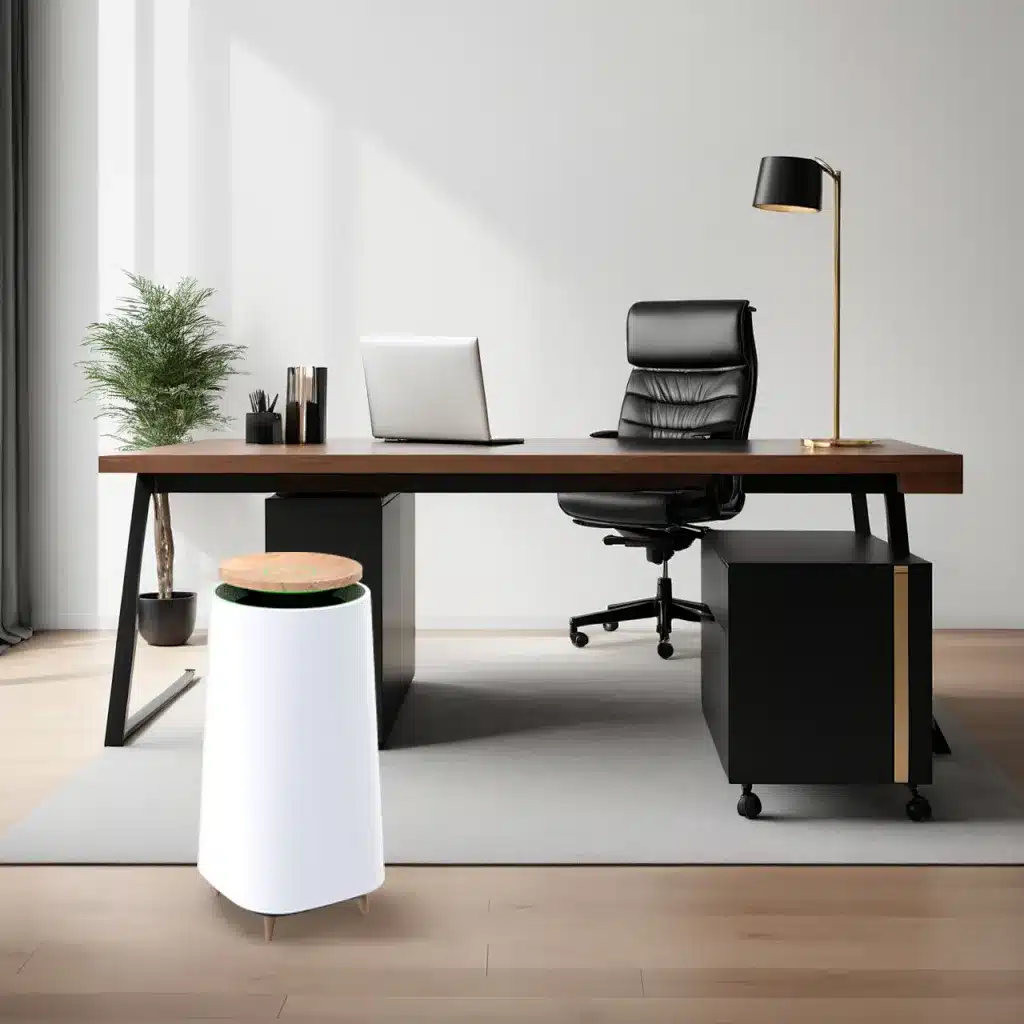
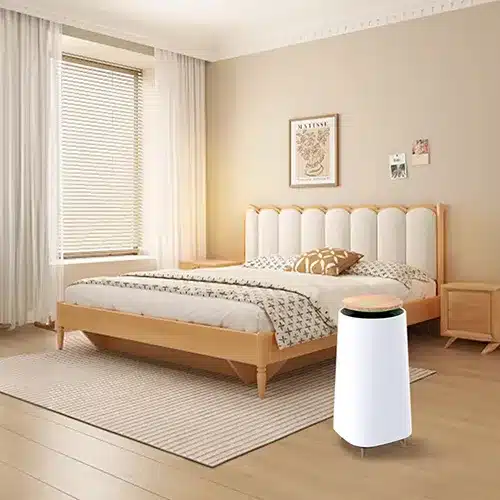
Poor air quality is now a global problem. Amidst heavy traffic, cigarette smoke, and pollution from household appliances, clean air is becoming increasingly scarce. Many people think the best solution is to stay indoors with the windows closed. However, air pollution knows no boundaries. Fine particles, dust, and allergens can still enter your workspace, car, or even bedroom, which is why a portable air purifier is essential: a device designed to provide clean air wherever you are. According to the World Health Organization, almost the entire global population breathes air that exceeds WHO air quality limits, making personal clean-air solutions more relevant than ever.
What Is a Portable Air Purifier?
A portable air purifier is a small air filtration device designed for easy portability. Its primary function is the same as a conventional air purifier: filtering harmful airborne particles such as dust, smoke, pollen, animal dander, bacteria, and viruses.
The difference lies in its flexibility. While home air purifiers are typically heavy and permanently installed, portable versions are lighter and more energy-efficient. Many models can be operated using batteries or USB ports, so they can be used in the car, office, or even while traveling.
Some modern portable air purifiers are also equipped with air quality sensors that automatically adjust the fan speed based on room conditions. This makes them ideal for those who are active and frequently on the move but still want to breathe clean air wherever they are.
Advantages of Portability
One of the main reasons portable air purifiers are gaining popularity is their portability, a key advantage that conventional air purifiers struggle to match. Their flexibility means you can place them in your workspace, bedroom, car, or even on a cafe table. Their compact size does not take up much space.
Energy efficiency is another advantage. Most portable models use low power, making them suitable for long-term use without worrying about high electricity consumption. Furthermore, they are easy to clean, as their simple design makes filter maintenance much more convenient.
Affordable prices make them a popular choice for many. Relatively cheaper than larger air purifiers, these devices can be a great starting point for anyone looking to improve air quality. For those living in cities with high levels of pollution, owning a portable air purifier is like having a personal clean air zone that you can take with you anywhere.
Portable Air Purifier Uses
The main advantage of this device is its adaptability to various situations. A portable air purifier can be used at home, in the office, in the car, or while traveling. For home use in bedrooms or small living rooms, it helps reduce dust, cooking odors, and allergenic particles in the air.
Many people spend 8 to 10 hours a day indoors. Portable air purifiers help keep the air fresh, especially in air-conditioned rooms, which tend to be dry and full of fine dust. This makes them ideal for office use. They are also suitable for use in cars, as pollution from other vehicles can enter through the air conditioning vents. For dedicated in-car solutions, you can read our guide on the car air purifier.
Mini models can be easily tucked into a bag or suitcase. This is especially useful for those who frequently stay in hotels or work in public spaces. This flexibility allows you to enjoy high-quality air anytime and anywhere without needing to carry a large, heavy device.
| Location | Main Benefit | Pollutants Addressed |
|---|---|---|
| Bedroom | Better sleep, fresher air | Dust, allergens, nighttime particles |
| Office / desk | Improved focus, fresher AC air | Fine dust, dry air particles |
| Car cabin | Cleaner air during commutes | Exhaust, road dust, VOCs |
| Hotels / travel | Clean air in unfamiliar spaces | Dust, odors, allergens |
| Small kitchen | Odor and smoke reduction | Cooking odors, smoke, grease particles |
Portable Air Purifier Technology
The advantage of this device lies not only in its compact size but also in the filtration technology it uses. The leading technology is generally a HEPA (High Efficiency Particulate Air) filter, the gold standard in air purification. This filter is capable of capturing particles such as dust, pollen, animal dander, and bacteria. For allergy sufferers, a HEPA filter is essential for reducing symptoms.
An activated carbon filter absorbs unpleasant odors, cigarette smoke, and harmful gases like formaldehyde, making it suitable for use in cars or small kitchens. To understand how these two filter types work together, you can read our comparison of HEPA vs activated carbon filters. Some models use an ionizer or negative ion generator to produce ions that attach to airborne dust particles, causing them to settle out of the air. Electrostatic and ion catalytic technologies offer a filterless alternative, removing pollutants without consumable filters. Ultraviolet light technology, found in some models, helps deactivate airborne bacteria and viruses, providing an additional layer of protection, especially in public spaces or vehicles.
Tips for Choosing the Best Portable Purifier
Choosing the right portable air purifier requires considering several important aspects to achieve optimal results. Here are the key tips to consider before purchasing:
- Filter or purification type: Ensure the product uses an effective technology for your needs, whether HEPA and activated carbon for particles and odors, or a filterless electrostatic or ion system for low-maintenance use.
- Capacity and coverage area: Match the device’s size to the room or car cabin where it will be used.
- Power source: Choose a model with a power option that fits your use case, such as a 12V car adapter for in-vehicle use or a USB connection for desk and travel use.
- Noise level: Choose a device with a low sound level to avoid disrupting your sleep or work.
- Easy maintenance: Choose a product that is easy to clean. Filterless models remove the recurring cost and inconvenience of replacing consumables.
Benefits of a Portable Air Purifier
Using a portable air purifier is not just a modern lifestyle trend. The tangible benefits can be felt immediately. These include reducing the risk of allergies and asthma and improving concentration at work, since clean air helps maintain focus and energy. It also helps prevent the spread of disease, because some models can deactivate airborne bacteria and viruses. An activated carbon filter effectively eliminates cigarette or food odors. Indirectly, cleaner air can also improve sleep quality, helping your body relax while you rest.
Clean air is no longer limited to large spaces with expensive equipment. With a portable air purifier, anyone can take fresh air with them anywhere, because health should not be limited by location.
For on-the-go clean air, Legom manufactures compact, mobile-ready air purifiers designed for personal spaces. The KJ20F-C01 automobile air purifier uses electrostatic purification with a real-time air quality sensor and automatic airflow adjustment, running on a 12V car supply with no filter consumables. The FLZ-MA-03 negative ion purifier clips onto a car air outlet, draws just 1W via Type-C USB, and operates in complete silence. Both deliver portable-class convenience for the car and small spaces without the ongoing cost of replacement filters. For those who also want clean drinking water at home, Legom’s water purifier range reflects the same commitment to clean, healthy living.
Frequently Asked Questions
What is the difference between a portable and a regular air purifier?
A regular home air purifier is typically larger, heavier, and designed to be permanently positioned in one room, covering a substantial floor area. A portable air purifier is smaller, lighter, and designed for personal spaces such as a car cabin, desk, or small room. Many portable models run on a car adapter or USB power, allowing them to be used where a full home unit cannot. While a portable unit covers a smaller area, its advantage is flexibility: it brings clean air to the specific spaces where you spend time, rather than being fixed to one location.
Do portable air purifiers actually work?
Yes, portable air purifiers are effective within their intended coverage area. A unit with a genuine HEPA filter captures fine particles including dust, pollen, allergens, and bacteria, while an activated carbon stage handles odors and gaseous pollutants. Filterless models using electrostatic or ion technology can also remove PM2.5, allergens, and certain gases without consumables. The key is matching the device’s capacity to the space: a portable purifier is designed for personal areas such as a desk, car cabin, or small room, not for purifying a large open-plan space. Within its rated coverage, a quality portable purifier meaningfully reduces the pollutants you breathe.
Are portable air purifiers safe to use overnight or in a car?
Yes, portable air purifiers are designed for continuous use, including overnight in a bedroom or throughout a long drive. For bedroom use, choose a model with a low noise level so it does not disturb your rest. If the unit includes an ionizer, check that it complies with ozone emission safety limits, as some ionizers produce small amounts of ozone. For in-car use, units that draw power from the car’s 12V supply or a USB port are convenient because they run only while you drive. Filterless electrostatic and ion models are particularly practical for vehicles, as there are no filters to replace.
Reviewed and updated by the LEGOM Technical Team on June 28, 2026. This article explains portable air purifier technology and uses, with guidance on choosing the right model for personal spaces and vehicles.