
Europe has become one of the pioneers in adopting environmentally friendly technology to improve energy efficiency and reduce carbon emissions. One of the devices at the center of this shift is the thermostat. Although it looks simple, this device significantly supports Europe’s transition to a greener future. Understanding the innovations applied to the European thermostat helps explain how the region is pursuing optimal energy efficiency across many sectors.
How Does a Thermostat Work?
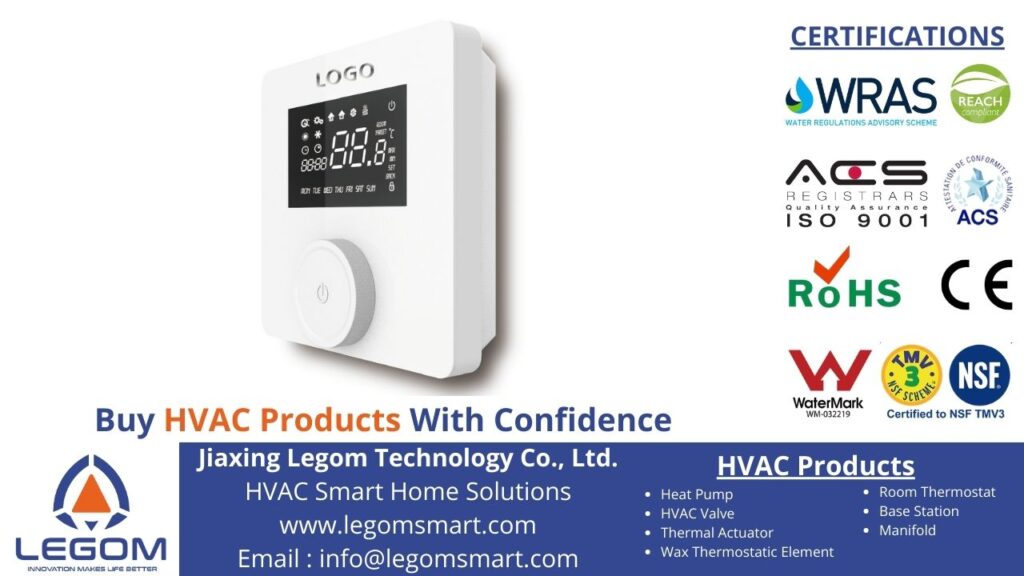
A thermostat is a device used to regulate and monitor room temperature. It is an automatic temperature controller that allows users to maintain a comfortable environment, turning the heating or cooling system on or off according to predetermined settings.
Thermostat technology has become more intuitive over time. Users can set the temperature manually, but modern units can also be programmed to adjust automatically according to usage patterns and preferences. Smart thermostats can even be connected to other devices in a smart home system, allowing remote control via a smartphone or virtual assistant.
The Role of Thermostats in the European Energy Transition
The building sector, which includes residential space heating, contributes around forty percent of total energy consumption in Europe, and much of this energy is still generated from fossil fuels. Increasing energy efficiency in this sector is therefore crucial to achieving European climate targets, and thermostats are one of the tools that can reduce energy waste.
Smart and efficient European thermostats optimize energy use by heating or cooling a room only when needed. This directly contributes to reducing carbon emissions, which is a primary goal of the European Green Deal, the program that sets Europe’s target of achieving carbon neutrality.
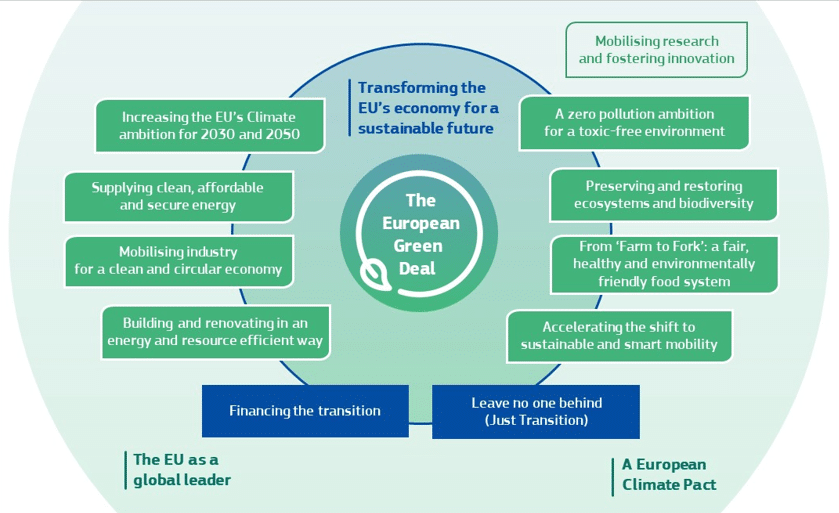
The European Green Deal, source: eur-lex.europa.eu
Smart thermostats can help address the problem of inefficient energy consumption. Studies suggest that using smart temperature control devices can meaningfully reduce residential energy consumption, with some analyses pointing to savings of up to around thirty percent depending on the home, climate, and how the device is used. This makes smart thermostats a valuable contributor to Europe’s energy sustainability targets.
Innovation in European Thermostat Technology
Europe has developed smart thermostats that go far beyond manual temperature adjustment, integrating Artificial Intelligence (AI) and the Internet of Things (IoT). Smart thermostats that use AI can learn user behavior patterns and automatically adjust temperature settings to optimize energy efficiency.
These thermostats can detect user habits, such as when homeowners usually leave or return home, and adjust the temperature to match that schedule. Thermostats equipped with motion and location sensors can further increase temperature adjustment accuracy. European thermostats also increasingly integrate with renewable energy systems.
The growing use of renewable energy such as solar panels and wind turbines in Europe has inspired thermostat designs that synchronize with home energy systems, so that heating or cooling is prioritized when sufficient renewable energy is being produced. This maximizes the use of clean energy.
Integration with IoT allows remote management, letting users set their home’s temperature from anywhere at any time through a smartphone app. This provides both comfort and energy savings. The latest innovations even allow thermostats to capture environmental data in real time, including local weather and current energy prices, so the device can adjust settings based on external factors. For example, the system can reduce heating when it is sunnier, or shift heating to times when energy prices are lower.
Thermostat Growth and Trends in Europe
Demand for smart thermostats and other temperature management technologies in Europe has grown significantly in recent years, with the market expanding at strong double-digit annual growth. This growth is driven by increasing consumer awareness of energy efficiency, the widespread adoption of smart homes, and government incentive programs for energy-efficient devices.
The growth comes not only from households but also from the commercial sector, where energy efficiency is increasingly a priority for companies looking to reduce operating costs and improve sustainability. European governments have taken proactive steps to support smart thermostat adoption. Germany, for example, offers subsidy schemes for households switching to modern temperature management technologies. The European Union has also introduced regulations such as the Energy Performance of Buildings Directive, which requires new European buildings to meet stricter energy efficiency standards. European thermostats therefore play a vital role in achieving these efficiency goals.
Conclusion
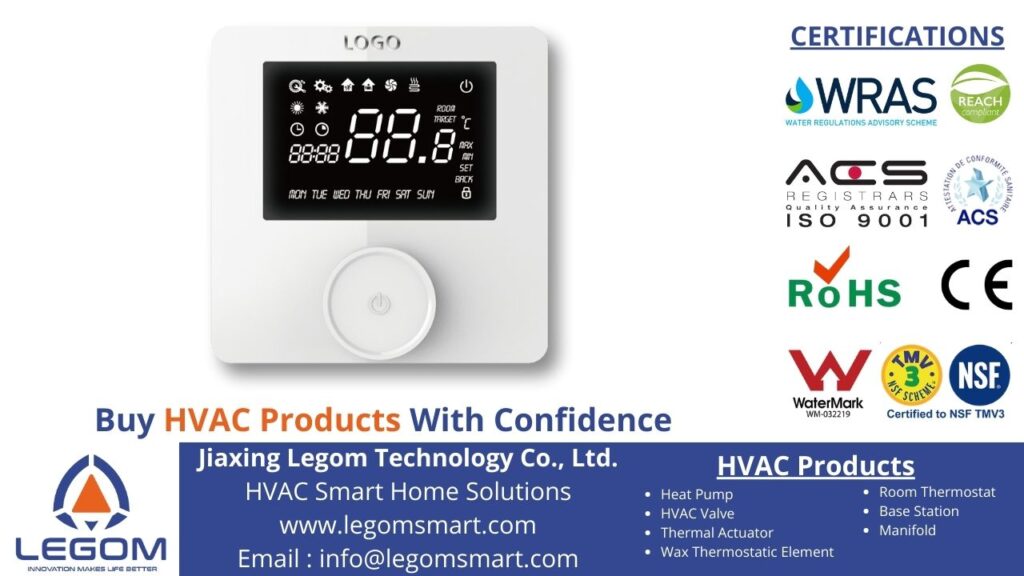
In line with Europe’s commitment to sustainable energy solutions, Legom offers CE-certified smart room thermostats designed to enhance comfort while reducing energy waste. We welcome you to experience our production process firsthand at our HVAC factory in China, or to consult with us online about our solutions. With worldwide shipping, Legom is ready to support households and businesses everywhere in achieving greater energy efficiency. Through our thermostat factory, we welcome your OEM or ODM orders for the European market.
Frequently Asked Questions
How much energy can a smart thermostat save?
A smart thermostat can meaningfully reduce home energy use by heating or cooling only when needed and by learning your daily patterns. Estimates vary widely depending on the home’s insulation, the local climate, the previous heating habits, and how the device is configured, with some analyses suggesting savings of up to around thirty percent in the residential sector. The real-world figure for any given household depends heavily on these factors, so the savings should be seen as a potential range rather than a guaranteed number. The largest savings typically come from homes that previously had little or no scheduling control.
Why are smart thermostats important for Europe’s energy goals?
Buildings account for around forty percent of Europe’s total energy consumption, and a large share of that goes to space heating still powered by fossil fuels. Reducing this consumption is essential to meeting the European Green Deal’s carbon neutrality target. Smart thermostats contribute by cutting energy waste, avoiding heating or cooling empty rooms, and integrating with renewable energy so that clean power is used when available. Combined with policies like the Energy Performance of Buildings Directive, they are one practical tool among many helping Europe improve building energy efficiency.
What features make a European smart thermostat energy efficient?
The most impactful features are programmable scheduling, AI-based learning of occupancy patterns, motion and location sensing, and remote control via a smartphone app. More advanced units integrate with renewable energy systems and respond to real-time data such as weather forecasts and energy prices, shifting heating to cheaper or greener periods. Together these features ensure the home is heated or cooled only when and where needed. For the European market specifically, CE certification and compatibility with local voltage and heating system standards are also essential.
Reviewed and updated by the LEGOM Technical Team on July 9, 2026. This article covers the role of European thermostats in the region’s energy transition, including how thermostats work, their contribution to the European Green Deal, technological innovations such as AI and IoT integration, and market trends, based on Legom’s experience as a room thermostat manufacturer supplying partners in more than 90 countries.